
2026 Top OEM Artificial Sports Turf Manufacturers

The 2026 Top OEM Artificial Sports Turf Manufacturers guide examines suppliers behind private-label athletic surfaces. It focuses on manufacturing depth, not polished catalogs alone. Buyers need more than green fibers and attractive samples. They need stable yarn quality, reliable backing, consistent tufting, and documented performance testing.

Dr. Andrew McNitt, a respected sports-turf researcher, has stated, “There is no one-size-fits-all answer when it comes to athletic field surfaces.” That observation frames this industry clearly. A football field, school courtyard, and training facility face different loads, climates, and maintenance routines. The right OEM Artificial Sports Turf partner should explain those differences without hiding technical limitations. Claims should connect with measurable details, such as fiber shape, pile height, stitch rate, drainage capacity, and shock-pad performance.

No supplier is flawless. That matters. Manufacturing delays, color variation, or unclear infill recommendations can affect an otherwise strong project. This guide therefore considers factory experience, quality-control systems, export capability, customization options, and after-sales communication. It also looks for evidence, including laboratory reports, installation references, product warranties, and completed sports projects. A factory visit can reveal more than a brochure. Watch the tufting line. Inspect the backing. Ask how rejected rolls are handled.

The manufacturers featured here are not presented as universal winners. Their suitability depends on budget, sport, climate, certification needs, and local installation skill. A thoughtful OEM decision begins with questions, not assumptions. That is the practical purpose of this 2026 overview.
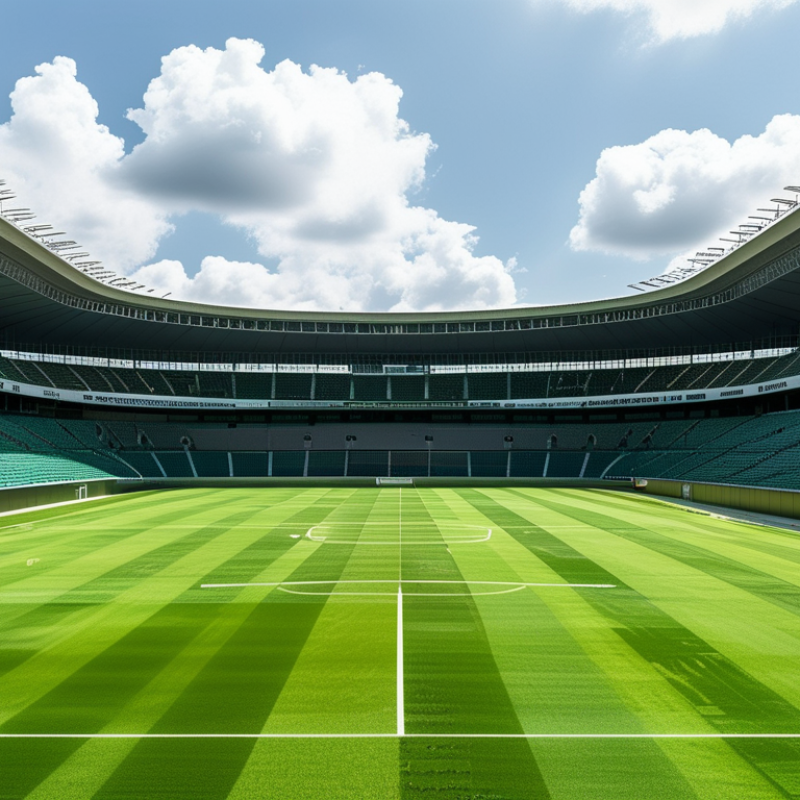
2026 Top OEM Artificial Sports Turf Manufacturers

2026 OEM Ranking Criteria: FIFA 4–8 m Ball Roll and 60–70% Shock Absorption

2026 Top OEM Artificial Sports Turf Manufacturers

For 2026 OEM evaluation, ball roll remains a practical performance signal. A controlled FIFA test range of 4–8 meters indicates predictable surface speed. The result affects passing, receiving, and player movement during competitive play. Testing should use consistent ball pressure, moisture, temperature, and rolling direction. Small testing errors can change the outcome.

Shock absorption between 60% and 70% supports safer, more comfortable play. It helps reduce impact when athletes run, turn, or fall. Independent laboratories should measure force reduction with calibrated equipment. Field checks are also necessary because laboratory results cannot reproduce every installation condition. Base compaction, seam quality, infill depth, and drainage can alter performance. Look closely.

Reliable OEM manufacturers should provide traceable production records and repeatable test data. Fiber shape and pile height influence ball response over time. Backing strength also matters under repeated traction. A strong sample may perform differently after months of sunlight and heavy use. Aging tests deserve equal attention. No test is perfect.

Manufacturers ranked highly should explain their testing methods clearly. They should report acceptable performance ranges, not only the best result. Site-specific recommendations show practical experience. Clear warranty terms and technical support also demonstrate accountability. A lower initial price means little if the surface loses consistent roll or shock absorption too quickly.


Fiber, Backing, and Infill Systems for 40–60 mm Sports Turf Applications

2026 Top OEM Artificial Sports Turf Manufacturers

Fiber, Backing, and Infill Systems for 40–60 mm Sports Turf Applications

For 40–60 mm sports turf, fiber height is only one design variable. Monofilament fibers can improve upright recovery, while textured yarns add surface resilience. The backing must hold tufts firmly during repeated sprinting and sliding. FIFA’s Quality Programme Handbook evaluates football turf through shock absorption, vertical deformation, ball rebound, and ball roll. Typical testing targets include 60–70% shock absorption and 4–10 mm vertical deformation. These figures show why fiber, backing, and infill must be engineered as one system.

Infill depth changes traction, cooling, and maintenance needs. Silica sand can support stability, while performance infill helps control foot comfort and surface response. ASTM F355 and ASTM F1936 provide useful methods for testing impact attenuation and infill performance. In real projects, drainage is often underestimated. A beautiful surface can still fail after heavy rain if the backing, sub-base, and drainage layers disagree. I have seen specifications focus too heavily on yarn shape. That is a costly mistake.

Tips: Request tuft bind, pile height, backing weight, infill depth, shock absorption, and vertical deformation data. Ask for independent laboratory results, not only factory claims. Check samples after brushing and water exposure. Small differences matter. Also review maintenance records from comparable fields. A 50 mm system may feel excellent at installation, yet become too firm when infill settles. OEM evaluation should include production consistency, batch traceability, installation guidance, and realistic service support. No specification is perfect. Field behavior still deserves honest review.

This chart presents representative component specifications for 40–60 mm artificial sports turf systems. Higher pile heights generally require greater face weight and more infill to support ball performance, player comfort, and system stability. Values are typical engineering ranges used for OEM system planning rather than company-specific data.

Manufacturing Scale: ISO 9001 Quality Control and OEM Customization Capacity

2026 Top OEM Artificial Sports Turf Manufacturers are distinguished by controlled production, not attractive samples alone. Manufacturing scale must support repeatable fiber extrusion, backing, coating, tufting, and roll inspection. ISO Survey 2023 recorded 1,265,216 valid ISO 9001 certificates across 189 countries, showing the standard’s broad quality-management adoption. Certification alone proves little. Auditable processes matter more.

A capable OEM factory records polymer batches, yarn denier, stitch rate, pile height, backing strength, and drainage results. Each production lot should carry traceable inspection records. Grand View Research valued the global artificial turf market at approximately USD 4.79 billion in 2023 and projected continued growth through 2030. That expansion increases pressure on factories to deliver consistent sports performance, not merely greater volume. FIFA’s Quality Programme also emphasizes laboratory and field testing for football turf, including ball interaction, shock absorption, and durability.

Customization exposes real manufacturing depth. Buyers may request specific pile structures, infill compatibility, line colors, roll widths, or climate-resistant backing. Strong OEM teams translate those requirements into documented specifications and pre-production samples. Small details matter.

Still, weaknesses appear. Some factories report impressive capacity but cannot explain rejection rates or corrective actions. That gap deserves scrutiny. ISO 9001 requires controlled improvement, yet human inspection can remain inconsistent. Independent testing, factory audits, sample retention, and shipment checks reduce that risk. The best supplier is not simply the largest; it is the one that can reproduce the same field behavior across thousands of square meters.

2026 Top OEM Artificial Sports Turf Manufacturers - Manufacturing Scale: ISO 9001 Quality Control and OEM Customization Capacity

Standards-based OEM benchmarking table. Company names and brand-specific data are intentionally excluded. “Typical reference range” describes commonly specified artificial sports-turf products and should be verified through current certificates, laboratory reports, factory audits, and product samples.
Evaluation Dimension Verified or Common Reference OEM Importance Recommended Evidence
Quality-management system ISO 9001:2015 certification; certificate scope should cover design, manufacture, or trading activities relevant to synthetic turf. Provides documented control of purchasing, production, inspection, corrective action, and customer complaints. Current certificate, certification-body details, scope, validity date, and site address.
Production-scale indicator Available tufting lines, coating lines, monthly capacity, operating shifts, and finished-goods storage should be disclosed as audited figures rather than marketing estimates. Helps assess continuity of supply, peak-season capacity, and large-project delivery risk. Factory audit, equipment list, production records, capacity statement, and recent shipment references with identities removed.
Sports-surface performance standard EN 15330-1 is commonly used for synthetic sports turf and yarn-based surfaces; project requirements may also specify federation or national standards. Creates a measurable basis for ball roll, shock absorption, traction, durability, and surface uniformity. Complete independent laboratory report identifying the exact product construction and test method.
Pile-height customization Common sports-turf specifications typically range from approximately 10 mm to 60 mm, depending on sport and system design. Allows optimization for football, hockey, tennis, multi-sport, training, and decorative applications. Technical datasheet, tufting specification, sample approval, and production tolerance record.
Yarn construction OEM options commonly include monofilament, fibrillated tape, textured yarn, or combinations; shape, denier, stitch rate, and total yarn weight must be specified. Influences resilience, appearance, abrasion resistance, ball interaction, and lifecycle performance. Cross-section drawings, yarn certificates, stitch-rate inspection, and retained production samples.
Backing system Typical constructions use primary backing with latex or polyurethane coating; backing weight, dimensional stability, and tuft bind are product-specific. Affects seam strength, installation stability, drainage, and resistance to delamination. Backing construction sheet, coating specification, tuft-bind report, and accelerated-aging results.
Roll-width and packaging flexibility Sports-turf rolls are commonly supplied in approximately 2 m or 4 m widths; roll length, core size, labeling, and pallet configuration are normally negotiable. Reduces installation waste and supports regional transport, warehouse, and container-loading requirements. Approved packing drawing, roll-dimension tolerance, loading plan, and shipping marks.
Color and visual customization Custom options may include green shades, two-tone fields, line markings, logos, perimeter colors, and non-standard yarn combinations. Supports project identity, sport zoning, architectural requirements, and private-label product programs. Color standard, physical swatch, lot-to-lot color tolerance, artwork approval, and pre-production sample.
UV and weathering resistance UV-aging assessment is commonly conducted using recognized accelerated-weathering methods such as ISO 4892-3 or a project-specified equivalent. Important for color retention, yarn strength, and service life in outdoor installations. Independent UV-aging report, exposure conditions, retained-strength results, and color-change evaluation.
Drainage capability Perforation pattern, open-area percentage, backing permeability, and complete system drainage must be measured; no single value applies to every turf design. Supports field availability after rainfall and reduces standing-water risk. Water-permeability test, perforation drawing, installation-system calculation, and site drainage design.
In-process quality control Key checkpoints should include incoming yarn inspection, stitch rate, pile height, coating weight, roll width, appearance, and final labeling. Reduces variation between production lots and improves repeat-order consistency. Inspection plan, calibration records, batch traceability, nonconformance log, and final inspection report.
Private-label and documentation support OEM programs may include custom labels, cartons, technical datasheets, installation manuals, warranty documents, and multilingual packaging. Enables distributors, contractors, and project owners to maintain consistent product identity and compliance files. Artwork workflow, document-control procedure, approved master files, and change-notification process.
Environmental and end-of-life information Material composition, recycled content, infill compatibility, restricted-substance declarations, and recyclability claims must be supported by product-specific evidence. Helps meet procurement policies, green-building requirements, and customer disclosure obligations. Material declaration, restricted-substance test, recycled-content certificate, and end-of-life statement.
Verification note: ISO 9001 certification confirms a quality-management system, not automatic compliance of every product with a sports-performance standard. Product-specific claims should be confirmed using current, traceable test reports and samples from the same manufacturing site and specification.

Testing and Compliance: FIFA Quality, ASTM, EN 15330-1, and World Rugby Standards

For 2026 OEM artificial sports turf, compliance begins with the complete playing system, not the grass fiber alone. FIFA Quality testing examines performance, durability, ball interaction, shock absorption, and rotational resistance. These results depend on the carpet, infill, pad, seams, and sub-base working together. A factory should provide current laboratory reports, production controls, and traceable batch records.

ASTM methods can measure pile height, tuft bind, water permeability, abrasion, and infill behavior. EN 15330-1 adds requirements for synthetic surfaces used in sports facilities, including durability and playing characteristics. Testing should reflect the intended climate and installation design. A sample may pass in a laboratory yet perform poorly after heavy rain, heat, or repeated maintenance. That gap deserves attention.

World Rugby requirements focus strongly on player safety, ball response, shock absorption, and surface consistency. OEM buyers should request independent testing on production samples, not only development prototypes. Inspect the roll width, backing, seam strength, drainage rate, and infill distribution before shipment. Keep records.

Certificates are useful, but they are not the whole decision. Some documents may be technically valid yet too old for the current formulation. I would also question unusually perfect results. Manufacturing variation happens. A reliable supplier explains corrective actions, retesting plans, and installation limits clearly. That honesty often reveals more expertise than a polished specification sheet.

Global OEM Comparison by Durability, Warranty Terms, Lead Time, and Cost per m²

2026 Top OEM Artificial Sports Turf Manufacturers

Global OEM comparison should begin with durability, not the lowest quote. In field evaluations, yarn shape, stitch rate, backing strength, and UV stability reveal more than product photos. A reliable OEM should provide abrasion data, drainage results, and test samples from the same production batch. Warranty terms need careful reading. Some cover fiber fading for eight years, but exclude poor maintenance, flooding, or unsuitable installation. That detail matters.

Lead time can range from four to ten weeks, depending on tufting capacity, color approvals, and shipping schedules. Confirm whether production starts after deposit or final artwork approval. Compare cost per m² using the same basis. A factory quote may exclude backing upgrades, packaging, freight, installation accessories, or local taxes. The cheapest option may become expensive after delivery. No scorecard is perfect. I still find small sample differences difficult to predict at full-field scale.

Tips: Request a physical sample, technical datasheet, warranty document, and recent quality records. Ask for production photos with batch labels. Measure pile height, total weight, and drainage performance independently when possible. Keep one retained sample for future claims. Also, ask what happens if delivery slips. A written remedy is stronger than a friendly promise. Where budgets are tight, reduce decorative features before reducing yarn density or backing quality. That compromise often ages badly.

Request Quote

Sign Up