What Are the Best CNC Milling Machines from China?
Choosing the best Cnc Milling Machines from China requires more than comparing prices on a supplier website. A serious buyer must examine spindle speed, positioning accuracy, controller stability, casting quality, and after-sales support. The right machine should match the material, part size, production volume, and tolerance requirements. A compact three-axis machine may suit aluminum prototypes, while a rigid five-axis model may better serve aerospace components. The distinction matters on the shop floor.
James A. Harvey, a respected CNC educator and author, states, “A CNC machine is only as good as the person programming it.” His observation remains practical. Even an excellent machine can produce poor parts when tooling, workholding, calibration, or code verification receives little attention. That is why this guide considers operator training and technical documentation alongside hardware specifications.
Chinese manufacturers now offer a broad range of Cnc Milling Machines, from economical workshop equipment to advanced systems with automatic tool changers and integrated probing. Some factories provide impressive factory tours and sample parts. Others present unclear accuracy claims. That gap deserves careful attention. Buyers should request test-cut records, inspection reports, service response times, and references from comparable users.
No shortlist is perfect. Published specifications can omit thermal drift, software limitations, or real maintenance costs. This article therefore evaluates practical evidence, not marketing language alone. It explores machine construction, control systems, application fit, supplier credibility, and long-term ownership value. The best choice may not be the cheapest machine. It is the one that performs consistently after the sales conversation ends.
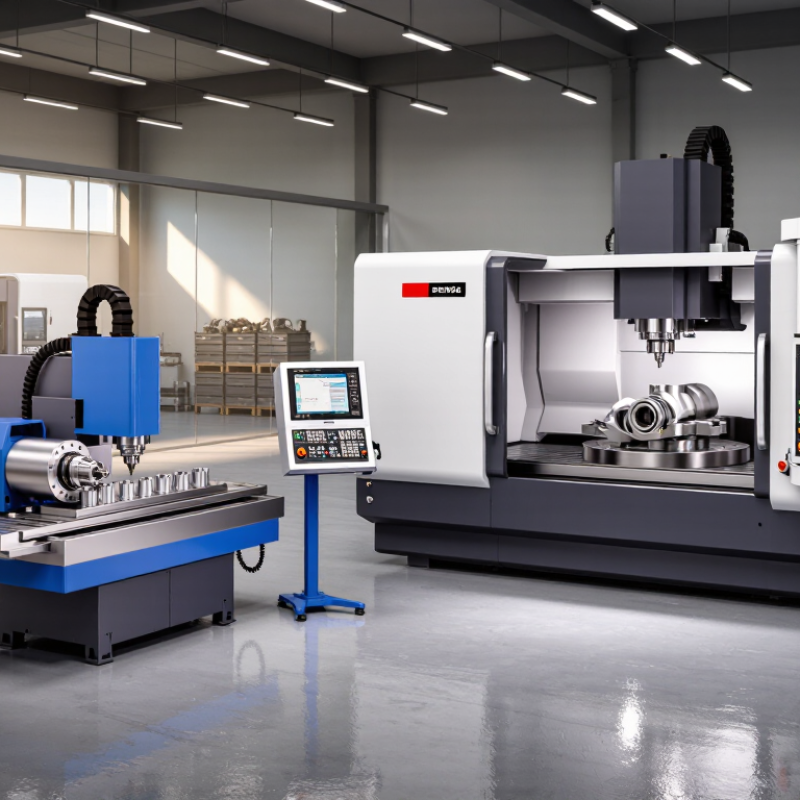
Define “Best” with 3–5 Axes, ISO 230-2 Accuracy, and BT30–BT50 Tooling
The best CNC milling machine from China depends on measurable performance, not catalogue adjectives. Gardner Intelligence’s 2024 World Machine Tool Survey reported China as the leading producer by value, representing roughly one-third of global output in 2023. That scale supports broad choices, but quality still varies between factories and configurations.
For general precision work, a rigid three-axis machine suits plates, brackets, and mould components. A fourth axis improves indexing and reduces repeated setups. Five-axis equipment reaches angled surfaces with fewer fixtures, although programming and inspection become more demanding. I would specify ISO 230-2 testing for positioning accuracy and repeatability. This standard defines the test method; it does not promise identical results in every workshop. Ask for the actual test report.
Tooling matters just as much. BT30 fits smaller cutters and faster spindle changes. BT40 offers a practical balance for medium steel parts. BT50 handles heavier tools, deeper cuts, and higher cutting forces. Check spindle taper condition, drawbar force, thermal drift, and tool runout. A 0.01 mm runout may ruin a small finishing pass. It happens.
Reports from the International Federation of Robotics show China remains the world’s largest industrial-robot installation market, indicating a deep automation supply chain. That does not automatically prove milling accuracy. Inspect sample parts, review calibration records, and compare results after warm-up. “Best” is still partly unfinished.
What Are the Best CNC Milling Machines from China? - Define “Best” with 3–5 Axes, ISO 230-2 Accuracy, and BT30–BT50 Tooling
| Machine Configuration | Axis Count | Typical Travel (X × Y × Z) | Spindle Speed | Tooling Interface | ISO 230-2 Positioning Accuracy | ISO 230-2 Repeatability | Typical Applications |
| Compact Vertical Machining Center | 3 | 500 × 400 × 400 mm | 8,000–12,000 rpm | BT30 | 0.010–0.020 mm/m | 0.005–0.010 mm | Small aluminum parts, prototypes, fixtures, and general job-shop work |
| Standard Vertical Machining Center | 3 | 800 × 500 × 500 mm | 8,000–10,000 rpm | BT40 | 0.010–0.018 mm/m | 0.005–0.008 mm | Steel components, mold bases, mechanical parts, and medium-volume production |
| High-Speed Vertical Machining Center | 3 | 700 × 450 × 450 mm | 12,000–20,000 rpm | BT30 or BT40 | 0.008–0.015 mm/m | 0.003–0.006 mm | Graphite, aluminum, medical parts, electronics components, and fine surface finishing |
| 4-Axis Vertical Machining Center | 4 | 800 × 500 × 500 mm | 8,000–12,000 rpm | BT40 | 0.010–0.020 mm/m | 0.005–0.010 mm | Parts requiring indexed machining, shafts, housings, impellers, and reduced setups |
| 5-Axis Simultaneous Machining Center | 5 | 600 × 600 × 500 mm | 10,000–18,000 rpm | BT40 | 0.010–0.020 mm/m | 0.005–0.010 mm | Aerospace components, turbine parts, medical implants, molds, and complex contoured surfaces |
| Heavy-Duty Vertical Machining Center | 3 or 4 | 1,000 × 600 × 600 mm | 6,000–8,000 rpm | BT50 | 0.015–0.025 mm/m | 0.008–0.015 mm | Large steel parts, roughing operations, dies, molds, and high-load cutting |
Specification note: The figures shown are representative ranges for comparable CNC milling machine configurations. Actual results depend on machine size, thermal conditions, calibration method, cutting tools, workholding, material, and test length. ISO 230-2 values should be verified from the supplier’s acceptance test report.
Compare Chinese CNC Types by Travel, Spindle Power, and Work Envelope
What Are the Best CNC Milling Machines from China?
Chinese CNC milling machines cover a wide range of travel, spindle power, and work envelope. The right choice depends on material, part size, and daily production volume. Compact desktop machines often provide 300–600 mm of X travel. Their 1.5–3 kW spindles suit plastics, wood, aluminum, and light prototype work. They occupy little floor space. However, their smaller envelope limits fixtures and repeated production.
Standard three-axis machining centers usually offer 600–1,200 mm of X travel. Spindle power commonly ranges from 5.5 to 15 kW. This range supports steel components, mold plates, and medium-sized mechanical parts. A wider table helps when using a vise, rotary fixture, and multiple workpieces together. Check the actual distance between the spindle nose and table. A large advertised travel may still feel restrictive after fixture installation.
Gantry-style machines provide longer travel, sometimes beyond 2,000 mm. They work well for large plates, fabricated parts, and extended profiles. Four-axis and five-axis models improve access around complex surfaces, but their usable envelope can shrink around rotary equipment. I have seen buyers focus on motor power and overlook rigidity. That mistake creates vibration, poor finishes, and short tool life. The specification sheet is not the whole truth. Request cutting-test videos, inspect backlash data, and confirm whether stated travel is usable with standard tooling. A realistic sample part reveals more than impressive numbers.
Match 8,000–24,000 rpm Spindles to Aluminum, Steel, and Titanium Jobs
Choosing a CNC milling machine from China starts with the spindle, not the catalog price. Aluminum usually benefits from 12,000–24,000 rpm, especially with small cutters and aggressive chip evacuation. High speed reduces rubbing and leaves cleaner walls. Use flood coolant or a well-directed air blast. Watch the chips.
Steel needs a different balance. A spindle range of 8,000–12,000 rpm can work well with rigid tooling, moderate feed rates, and controlled depth of cut. Titanium often needs similar or lower speeds, despite its demanding strength. Excessive rpm can create heat quickly and damage the tool. Torque matters more than a dramatic top-speed number. Check spindle power across the working range, not only at maximum rpm.
In practical machine evaluations, I would inspect taper accuracy, spindle runout, thermal stability, and table rigidity. A 24,000 rpm spindle is not automatically better for steel. It may even perform poorly during heavy cuts if the frame flexes. That lesson is easy to miss. Ask for test-cut data using aluminum, steel, and titanium samples. Measure surface finish, dimensional drift, and tool wear after warm-up. Confirm coolant delivery, chip removal, control reliability, and local technical support. Some specifications look impressive but remain vague. A short factory demonstration is useful, yet it cannot replace independent inspection. Allow room for doubt.
Screen Suppliers by ISO 9001, CE, FAT, Warranty, and Service Response
What Are the Best CNC Milling Machines from China?
A reliable CNC milling machine starts with disciplined supplier screening, not attractive photographs. Request an ISO 9001 certificate and verify its scope, issuing body, and validity. A certificate covering unrelated activities may reveal little about machine production. CE documentation should also identify the exact model, electrical system, and applicable safety requirements. CE is not a performance guarantee.
Ask for a Factory Acceptance Test before shipment. The FAT should record spindle runout, positioning accuracy, repeatability, coolant flow, tool changes, and sample cutting results. Watch the machine cut steel or aluminum, not only move through an empty program. Request dated videos and signed test sheets. Numbers without measuring conditions can mislead.
Warranty terms need specific coverage, response times, spare-part responsibilities, and exclusions. Confirm who pays for remote diagnosis, replacement components, and technician travel. A strong supplier should answer technical questions within one business day and provide a named service contact. Test this response before ordering. Send a realistic fault scenario. The reply may expose weak support.
Inspect installation drawings, manuals, and electrical schematics carefully. Translation errors happen. I would not ignore them. One missing parameter can delay commissioning for days. Ask for operator training, backup machine files, and preventive-maintenance guidance. A lower purchase price can become expensive when service communication is slow. Personally, I would value documented testing and responsive support over polished sales language. Practical evidence still matters more than promises.