
Choosing the best Patio Entry Door from China requires more than comparing catalog prices. The right option should balance design, durability, weather resistance, security, and installation support. A door may look elegant online, yet perform poorly under heavy rain or coastal humidity. Real evaluation begins with the frame material, glass specification, hardware quality, and sealing system.
Experienced buyers usually request samples, factory videos, test reports, and detailed production drawings. Aluminum frames can offer strength and low maintenance, while engineered wood provides warmth and traditional character. Tempered or laminated glass improves safety, but its performance depends on correct installation. Check hinges, locks, drainage channels, thresholds, and weatherstripping carefully. Small details matter.
Supplier credibility also deserves attention. Look for manufacturers with documented quality procedures, export experience, clear warranties, and responsive communication. Independent inspections can verify dimensions, finish consistency, and opening performance before shipment. However, no factory is perfect. Even a reliable supplier may misunderstand a measurement or overlook a packaging weakness. I would confirm every specification in writing and inspect high-risk details twice.
The best choice depends on your climate, opening size, architectural style, budget, and local building requirements. A beautiful door is not enough. It must arrive undamaged, fit accurately, operate smoothly, and remain dependable through changing seasons. Careful comparison turns a crowded Chinese market into a manageable purchasing decision. There is no universal winner.
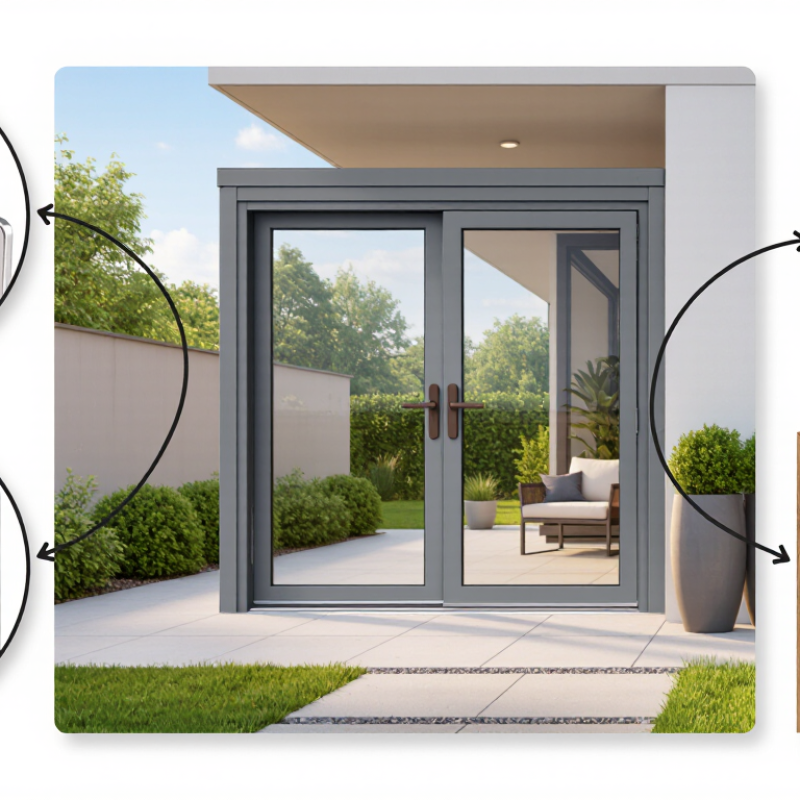
The best patio entry door from China is defined by performance, not appearance alone. It should open smoothly, seal tightly, and withstand repeated daily use. A strong frame resists warping during hot summers and sudden temperature changes. For wet regions, drainage paths and corrosion-resistant hardware matter greatly. Coastal homes need extra protection against salt air.
Glass quality also deserves close attention. Tempered or laminated glass can improve safety and reduce injury risks. Low-emissivity glass may help control indoor heat and glare. However, glass performance depends on the complete door system, not one impressive specification. Ask for verified test data, material details, and clear warranty terms. A trustworthy manufacturer should explain air leakage, water resistance, wind pressure, and operating-cycle results.
Installation can decide whether a good door performs well. Measure the opening carefully, including wall thickness, sill height, and exterior drainage. I have seen attractive doors fail because the threshold was installed unevenly. That mistake is easy to underestimate. Request drawings, packing photos, and pre-shipment inspection records before ordering. Communication also matters. Confirm dimensions, color samples, hardware positions, replacement parts, and delivery responsibilities in writing. No patio door is perfect. The best choice is the one whose weaknesses are visible, tested, and manageable.
Patio doors from China should be chosen by exposure, opening size, and daily use, not price alone. Material changes comfort, maintenance, and service life.
For humid or coastal homes, thermally broken aluminum offers slim frames and strong wind resistance. Ask for powder-coating test results and drainage details. uPVC provides useful insulation and usually costs less, but dark profiles may expand in intense sunlight. Fiberglass resists moisture and temperature changes, although it can be less common in custom Chinese production. Wood feels warm and authentic, yet it needs regular sealing. A mistake I often see is selecting wood for an uncovered patio.
Sliding doors suit narrow patios because panels move along the wall. They need accurate rollers and a level track. French doors provide a traditional opening and better emergency egress, but require more clearance. Folding doors create a wide opening for entertaining, though their hardware needs careful adjustment. For large glazed areas, request tempered or laminated safety glass, low-E coating, and insulated glazing. The U.S. Department of Energy reports that windows can represent 25–30% of household heating and cooling energy use, making glass performance important. Patio doors are part of that exposed envelope. NFRC labeling helps compare U-factor and solar heat gain coefficient. Lower U-factor generally improves insulation, while SHGC should match the climate. A low SHGC can reduce summer heat, but may limit useful winter sunlight. Confirm air leakage, water penetration, and wind-load results against local requirements. Supplier photographs are helpful, but independent test documents are more reliable.
| Material / Door Style | Typical Patio Application | Main Advantages | Thermal Performance | Weather & Maintenance | Space Requirement | Best Choice When... |
|---|---|---|---|---|---|---|
| Thermally Broken Aluminum Sliding Door | Modern patios, wide openings, balconies, and homes requiring slim sightlines. | Strong frames, large glass areas, smooth sliding operation, and good resistance to sunlight and moisture. | Generally better than non-thermally broken aluminum because the insulated frame reduces heat transfer. Performance depends on frame depth, glazing, seals, and tested assembly. | Low maintenance; powder-coated or anodized finishes can provide durable exterior protection. Drainage and track cleaning are required. | Requires clear floor space along the opening for the sliding panels, but no door-swing clearance. | You want a durable, contemporary door with a large glass surface and limited interior space. |
| uPVC Sliding Door | Residential patios where insulation, cost control, and simple maintenance are priorities. | Naturally low thermal conductivity, multi-chamber profiles, welded corners on many systems, and relatively low purchase cost. | Usually offers good insulation when combined with insulated glazing and properly designed gaskets. Large or dark-colored frames may require additional reinforcement and thermal consideration. | Resistant to rot and corrosion; should be protected from severe impact and excessive heat buildup. Cleaning is generally easy. | Needs a track zone for the sliding sash but does not occupy the room with a swinging panel. | Energy efficiency and value are more important than ultra-slim frames or very heavy panels. |
| Fiberglass Hinged Patio Door | Single-door or French-door openings, exposed façades, and homes seeking stable insulated panels. | Good dimensional stability, resistance to moisture-related swelling, and strong insulation potential with a solid or glazed insulated leaf. | Often provides better panel insulation than a large glass sliding door, although the final result depends on glazing, core construction, frame, and weather seals. | Low maintenance and resistant to corrosion and rot; hinges, locks, and weather seals still need periodic inspection. | Requires clear space for the door leaf to swing inward or outward. | You need a well-insulated hinged door and can provide adequate swing clearance. |
| Wood or Wood-Clad Hinged Door | Traditional homes, premium interiors, and projects where natural appearance is important. | Warm appearance, design flexibility, and good insulation potential when properly engineered and finished. | Can perform well thermally, but solid wood and insulated wood-composite constructions respond differently to climate and moisture. | Requires regular inspection and refinishing, especially on exposed exterior surfaces. Poor maintenance can increase the risk of moisture damage and movement. | Requires swing clearance and sufficient opening space for the frame and threshold. | Appearance and architectural character outweigh the need for the lowest maintenance. |
| Steel Hinged Patio Door | Security-focused entrances, utility access, and locations requiring a rigid, impact-resistant leaf. | High strength, rigid construction, and compatibility with multi-point locking systems. | Insulated steel doors can perform well, but uninsulated steel conducts heat readily. Thermal breaks and an insulated core are important. | Exterior coatings must remain intact to limit corrosion. Hinges, threshold drainage, and seals should be checked regularly. | Needs swing clearance; heavier leaves may require robust hinges and a properly reinforced frame. | Security and rigidity are the primary concerns, and the door will receive suitable anti-corrosion protection. |
| Bi-Fold / Folding Patio Door | Wide openings, entertaining areas, garden rooms, and spaces designed for a large indoor-outdoor connection. | Opens a larger proportion of the wall than a standard slider and can stack panels to one or both sides. | Performance depends heavily on the number of panels, inter-panel seals, threshold design, and installation accuracy. | More rollers, hinges, seals, and adjustment points mean more maintenance than a basic sliding door. Tracks must remain clean and correctly aligned. | Needs stacking space beside the opening and sufficient structural support above the frame. | Maximum opening width and indoor-outdoor access are more important than the simplest maintenance routine. |
| Lift-and-Slide Door | Large premium openings with heavy glass panels and a high-end architectural design. | A lifting mechanism reduces seal friction during movement and can support large, heavy panels when correctly engineered. | Can provide strong air and water resistance with high-quality seals, insulated frames, suitable glazing, and accurate installation. | Requires precise installation, clean tracks, correct panel adjustment, and periodic hardware inspection. | Requires a sliding track and wall-side stacking area; does not need a conventional swing zone. | You need very large glazed panels and are prepared for higher structural, hardware, and installation requirements. |
| French Patio Door | Classic residences, smaller patio openings, and designs requiring a symmetrical double-door appearance. | Wide clear opening when both leaves are open, familiar operation, and flexible glazing or panel designs. | Insulation depends on the frame material, panel construction, glazing, meeting-stile seals, and threshold design. | Maintenance varies by material; double leaves require accurate alignment and inspection of the central seal and locking hardware. | Requires swing clearance for one or both leaves and adequate space around the central meeting stile. | You prefer a traditional appearance and need occasional full-width access rather than continuous sliding operation. |
Note: Actual thermal, air, water, wind-load, acoustic, and security performance depends on the complete tested door assembly, including the frame, glazing, hardware, seals, threshold, installation method, and local building requirements. Request project-specific test reports and performance classifications before selecting a patio entry door.
What Is the Best Patio Entry Door from China?
Choosing a patio entry door from China requires more than comparing catalog prices. Energy efficiency starts with the whole assembly: glass, frame, seals, threshold, and installation. Ask for tested U-value, solar heat gain data, and air-infiltration results. A low U-value can mislead when the frame performs poorly. Check the glazing spacer and gasket material. On a cold morning, weak seals may reveal condensation or a noticeable draft.
Security needs measurable details. Look for a multi-point locking system, reinforced hinge areas, laminated glass, and a strong cylinder. Ask whether the complete door assembly was tested, not only the lock. Request current test reports and verify the laboratory independently. Product photos are useful, but they cannot confirm resistance to forced entry. Paperwork is not proof. Compare production samples with approved drawings before placing a large order.
Durability depends on climate and maintenance. For coastal homes, examine salt-spray testing, drainage paths, and corrosion-resistant hardware. Powder-coated or treated surfaces should remain consistent around corners and cut edges. Operate the door repeatedly and inspect for sagging, rubbing, or seal compression. A small threshold gap can become a serious water problem during heavy rain. I would also confirm replacement gasket availability. This detail is easy to overlook. My own evaluation would include installation quality, because even an excellent door can fail when the frame is not square.
A practical comparison of common patio-door construction types using a 100-point evaluation framework: energy efficiency, security, and durability. Higher scores indicate better overall performance potential when independently tested and properly installed.
Scores reflect typical material characteristics and industry evaluation factors, including thermal transmittance, multi-point locking compatibility, weather resistance, structural stability, and expected service life. Always verify U-factor, air leakage, water penetration, structural pressure, and forced-entry test results for the specific door.
Choosing the best patio entry door from China depends heavily on customization and manufacturing control. Buyers can specify aluminum, uPVC, steel, or engineered wood frames. Aluminum suits slim profiles and large glass panels. uPVC offers strong insulation at a lower cost. Wood provides warmth, but it needs stricter moisture protection. Custom options include sliding, folding, hinged, and lift-and-slide systems. Glass may include double glazing, triple glazing, low-e coatings, tempered glass, laminated glass, or decorative patterns.
Performance requires more than appearance. The U.S. Department of Energy reports that windows can represent 25–30% of residential heating and cooling energy use. Therefore, buyers should request U-value, solar heat gain coefficient, air leakage, water penetration, and structural test results. NFRC and AAMA/WDMA/CSA testing references can improve comparability between factories. Hardware, rollers, locks, screens, drainage channels, powder coating, anodizing, and wood-grain finishes are also customizable. Small details matter.
Manufacturers can usually adjust dimensions, colors, profiles, glass thickness, packaging, and branding-free documentation. Tooling may reduce unit cost at higher volumes, but it adds early expense. Ask for a production sample before approving mass manufacturing. Check corner joints, gasket compression, frame squareness, and roller movement by hand. The cheapest quote is rarely the best answer. I would still challenge unusually low prices. They may hide thinner walls, weaker hardware, or incomplete testing. The 2024 International Energy Agency buildings report identifies buildings as responsible for about 30% of global final energy demand, making thermal performance a practical purchasing concern.
Comparing Chinese patio door suppliers requires more than checking the factory price. My first mistake was comparing quotations with different glass, hardware, and packaging standards.
Ask for a line-item pro forma invoice, including frame size, wall thickness, glass specification, finish, carton design, and replacement policy.
A low quote may hide tooling charges or weak export packaging. Request production photos, test reports, and a video inspection before final payment.
The U.S. Department of Energy reports that windows can cause 25–30% of residential heating and cooling energy use.
For a large patio opening, compare U-factor, Solar Heat Gain Coefficient, air leakage, and visible transmittance.
For North American projects, verify the rating through an independent certification system, not only a supplier PDF.
European buyers may need CE-related documentation, while ISO 9001 confirms process management, not product performance. That distinction is often missed.
UNCTAD’s Review of Maritime Transport states that ships carry over 80% of global merchandise trade by volume.
Compare EXW, FOB, CIF, and DDP carefully, because each assigns freight, insurance, customs, and risk differently. Add inland trucking, duties, inspection, storage, and possible port delays.
Use a written inspection standard. Still, forecasts can fail. Weather, congestion, and incorrect dimensions can disrupt a perfect schedule.
A reliable supplier should show recent shipment records, provide a realistic lead time, and accept measurable quality checkpoints.

Sign up for our mailing list to stay informed and up to date with our latest news and products!
(905) 832 – 0600
2175-A Teston Road
Maple, Ontario
L6A 1T3
(780) 451 – 0238
24790 – 117 Avenue
Acheson, Alberta
T7X 6C2
(604) 882 – 1564
9511 – 194A Street
Surrey, British Columbia
V4N 4G4
(306) 955 – 6005
3926 Arthur Rose Avenue Saskatoon, Saskatchewan
S7P 0C9
(450) 687 – 2721
2750 Rue Bernard-Lefebvre
Laval, Quebec
H7C 0A5