
Choosing among the China Top 10 Bulk Oil Storage Tank Manufacturers requires more than comparing factory size or website claims. Buyers should examine engineering experience, welding quality, material traceability, and project performance. A reliable China Bulk Oil Storage Tanks Manufacturer should provide clear drawings, tank capacity data, corrosion protection details, and inspection records. These details matter when a storage tank operates under strong sunlight, heavy rain, or changing temperatures.
This guide introduces leading Chinese manufacturers through practical evaluation points. The review considers API-related design knowledge, fabrication equipment, quality-control procedures, delivery experience, and after-sales support. It also examines whether suppliers can handle carbon steel tanks, stainless steel tanks, vertical storage systems, and customized accessories. A real workshop tells an important story. Clean welding areas, marked steel plates, calibrated instruments, and organized testing records often reveal professional discipline.
A ranking is never perfect. Company capabilities can change. Some public information may also remain incomplete. Therefore, readers should request recent references, factory videos, certificates, and technical drawings before making a decision. Site conditions deserve equal attention, including foundation design, drainage, access space, fire-safety planning, and local compliance requirements. The best supplier is not always the largest one. It is the manufacturer that understands the application, communicates limitations honestly, and supports the tank throughout its service life. Careful comparison reduces costly surprises and helps buyers select a safer, more durable storage solution.
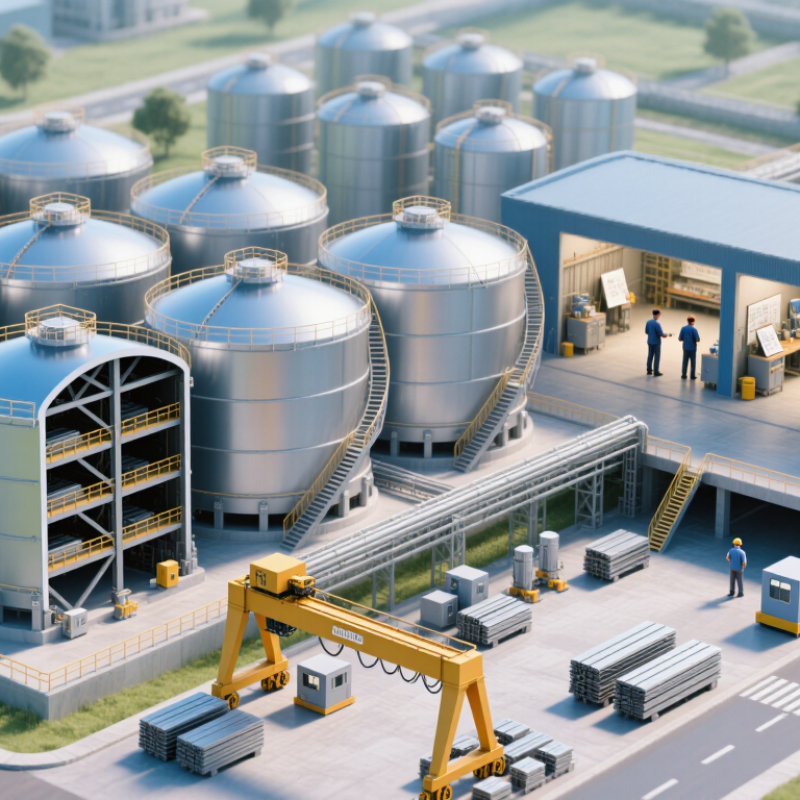
China Top 10 Bulk Oil Storage Tank Manufacturers?
Bulk oil storage tanks are engineered vessels for holding large volumes of petroleum-based liquids before processing, transport, or distribution. In China, they support refineries, ports, logistics parks, power facilities, and industrial plants. Their role is practical: maintain supply, reduce handling frequency, and protect oil quality during storage.
Common designs include vertical fixed-roof tanks, floating-roof tanks, and horizontal tanks for smaller sites. Construction usually involves carbon steel, welded seams, reinforced foundations, calibrated level gauges, vents, and grounding systems. A double-wall structure can add spill protection. Bund walls matter too. They limit leakage across the site.
From field inspections, corrosion often begins near tank bottoms, roof joints, and drainage points. A clean exterior proves little. Internal inspection, thickness measurement, valve testing, and leak monitoring provide stronger evidence. Operators should also control static electricity, lightning risks, vapor release, and unauthorized access. Chinese projects must match current safety, fire-control, environmental, and pressure-equipment requirements. Local approval conditions can differ by province and site type.
Capacity alone should not decide a tank’s value. Temperature changes, oil viscosity, turnover speed, foundation settlement, and future expansion all affect performance. Some projects overbuild capacity, while others ignore maintenance access. That assumption is risky. A reliable storage plan connects tank design with daily operation, emergency response, inspection records, and trained personnel.
China Top 10 Bulk Oil Storage Tank Manufacturers
Ranking Chinese oil storage tank manufacturers requires more than comparing annual output. The IEA’s Oil 2024 report estimates global oil demand at 102.9 million barrels per day in 2024. It expects demand to reach 105.4 million barrels per day by 2030. This pressure increases the need for safe, scalable bulk storage. A credible ranking should examine tank capacity, steel quality, welding control, inspection records, and delivery performance. It should also verify compliance with API 650, ISO 28300, and relevant Chinese standards.
Safety comes first. Always.
Manufacturers with documented non-destructive testing, calibrated measurement systems, and traceable materials deserve higher scores. Field experience matters too. Ask for photographs, commissioning records, maintenance logs, and references from comparable terminals. The Global Energy Monitor’s Global Oil Infrastructure Tracker shows that large storage and refining projects remain concentrated in major industrial regions, where schedule delays can create costly bottlenecks. Therefore, production capacity should be judged against real project evidence, not impressive brochures. Financial stability, spare-parts support, corrosion protection, and emergency response training also affect long-term value. One weakness remains: public data often lacks consistent definitions for “installed capacity.” Rankings should disclose this limitation instead of pretending that every number is perfectly comparable.
This data table presents a transparent, brand-neutral framework for evaluating and ranking Chinese bulk oil storage tank manufacturers. The weighting is based on commonly used technical, quality, safety, project-delivery, and compliance factors in aboveground petroleum storage projects.
| Evaluation Dimension | Weight | Realistic Industry Benchmark | Recommended Verification Evidence |
|---|---|---|---|
| Applicable Tank Design Standards | 15% | Capability to design fixed-roof, floating-roof, and low-pressure storage tanks in accordance with applicable standards such as API 650, API 620, EN 14015, or equivalent national standards. | Design basis, calculation books, engineering drawings, standard-compliance matrix, and examples of completed tank projects. |
| Fabrication Capacity | 12% | Adequate workshop area, plate-forming equipment, welding facilities, lifting capacity, and production planning for large-diameter and high-volume tank projects. | Factory audit, equipment list, workshop capacity statement, production records, and monthly or annual output data supported by documentation. |
| Welding and Material Traceability | 12% | Qualified welding procedures, certified welders, controlled welding consumables, heat-number traceability, and documented inspection records. | WPS and PQR documents, welder qualification records, material certificates, weld maps, repair logs, and quality-control procedures. |
| Non-Destructive Testing Capability | 10% | Access to qualified visual, radiographic, ultrasonic, magnetic-particle, or liquid-penetrant testing appropriate to the tank design and applicable code. | NDT personnel qualifications, inspection procedures, equipment calibration certificates, test reports, and third-party inspection arrangements where required. |
| Corrosion Protection System | 10% | Documented surface preparation, coating selection, dry-film-thickness control, holiday testing where applicable, and compatibility with stored petroleum products and site conditions. | Coating procedure, paint technical data sheets, surface-profile records, environmental monitoring logs, thickness reports, and inspection certificates. |
| Safety and Environmental Design | 10% | Provision for tank vents, emergency venting, overfill protection, grounding, lightning protection, firewater interfaces, secondary containment, and safe access platforms. | Safety design review, hazard assessment, nozzle and vent schedule, grounding plan, fire-protection interface documents, and applicable regulatory approvals. |
| Quality Management System | 9% | A documented quality management system aligned with ISO 9001 or an equivalent recognized framework, supported by controlled inspection and non-conformance processes. | Valid management-system certificate, quality manual, internal-audit records, corrective-action reports, inspection and test plans, and document-control procedures. |
| Project Engineering and Installation Support | 8% | Ability to provide engineering coordination, site supervision, erection guidance, hydrostatic-test support, commissioning assistance, and technical documentation. | Project organization chart, method statements, commissioning checklists, site-support records, as-built documentation, and client acceptance documents. |
| Export and Logistics Readiness | 7% | Experience with export packing, shipping documentation, modular or field-erected delivery, international payment terms, and coordination with overseas construction sites. | Anonymized export records, packing specifications, logistics plans, shipping documents, delivery schedules, and evidence of overseas project support. |
| Warranty, Lifecycle Service, and Commercial Reliability | 7% | Clear warranty terms, spare-parts and replacement support, response procedures, lifecycle inspection guidance, and a record of meeting contractual delivery requirements. | Standard warranty document, after-sales procedure, service-level commitments, anonymized customer references, delivery-performance records, and contract terms. |
China’s Top 10 Bulk Oil Storage Tank Manufacturers are best assessed through evidence, not promotional rankings. A credible manufacturer should show completed storage projects, qualified welding procedures, and traceable material certificates. Experience with fixed-roof, floating-roof, and double-wall tanks also matters. Tank sizes may range from several hundred to tens of thousands of cubic meters.
Look closely at engineering control. Strong suppliers calculate wind, seismic, settlement, thermal expansion, and foundation loads before fabrication. Their quality teams inspect plate thickness, weld seams, nozzle alignment, and coating thickness. Hydrostatic testing and documented non-destructive testing should be standard practice. Ask for inspection records, production photographs, and clear delivery schedules. Small details matter.
The top ten shortlist should also consider export experience, spare-part support, and installation guidance. Some manufacturers provide better drawings but weaker field service. Others offer competitive prices yet communicate poorly after delivery. This is where buyers need patience. No ranking is perfect. A tank can meet a technical code and still suffer from poor drainage or difficult maintenance access. Reviewing local fire protection rules, environmental requirements, and operating temperatures remains essential. A dependable choice combines engineering depth, transparent documentation, realistic pricing, and responsive technical support. Expect questions from the supplier. Serious manufacturers usually ask about fluid properties, filling cycles, site conditions, and future expansion.
This chart presents representative nominal capacity benchmarks for bulk oil storage tank configurations commonly used in China and globally. Values are technical reference points rather than company or brand data; actual capacity depends on project requirements, applicable standards, site conditions, and product characteristics.
When evaluating China’s top 10 bulk oil storage tank manufacturers, buyers should examine tank design before production scale. Vertical fixed-roof tanks suit stable, low-volatility oil storage. Floating-roof tanks reduce vapor space and evaporation losses. Horizontal tanks often serve smaller sites or roadside distribution facilities. Double-wall tanks provide an added containment layer. Type selection depends on product behavior, site limits, and safety requirements.
Carbon steel remains common for large tanks because it offers strength and practical fabrication costs. Stainless steel suits corrosive products and hygienic edible-oil applications. Internal coatings can improve corrosion resistance, but surface preparation determines their real performance. Capacities may range from 20 cubic meters to more than 100,000 cubic meters. A 100-cubic-meter tank fits a regional depot, while terminal tanks require complex foundations and monitoring systems. Bigger is not always better.
Bulk oil tanks support refineries, logistics terminals, agricultural processors, energy facilities, and industrial plants. Reliable manufacturers should provide material certificates, weld inspection records, dimensional reports, and hydrostatic test results. Independent inspection adds useful confidence. Factory photos prove little. Buyers should also review coating thickness, roof drainage, emergency vents, access ladders, and grounding details. One overlooked issue is future maintenance space. A tank may meet its initial capacity target, yet become difficult to inspect after installation. That weakness deserves honest engineering review.
Choosing a suitable Chinese oil storage tank manufacturer requires more than comparing quotations. A low price may hide thinner plates, limited testing, or weak after-sales support. Define the tank’s capacity, oil type, operating temperature, design pressure, foundation conditions, and delivery destination before requesting offers. Clear specifications create fair comparisons.
Ask each manufacturer for material certificates, welding procedures, inspection records, and dimensional reports. Confirm whether its engineers understand recognized tank design standards and your local regulatory requirements. Factory experience matters. Request photographs of completed tanks, but verify them through references or a site visit. A polished catalog is not proof. During one sourcing review, unclear weld traceability created avoidable delays. That detail should never be ignored.
Examine the full project cost, including coating, nozzles, ladders, transport, installation guidance, spare parts, and testing. Check the company’s quality system and production capacity during busy periods. Can it explain how it controls plate deformation after welding? Can it provide a realistic schedule instead of a perfect promise? Ask about corrosion protection for your climate, especially near coastal areas. Also review communication speed and technical document quality; poor drawings often become expensive site problems. Leave room for independent inspection before shipment. Even experienced buyers can overlook foundation tolerances. Review them again.

Sign up for our mailing list to stay informed and up to date with our latest news and products!
(905) 832 – 0600
2175-A Teston Road
Maple, Ontario
L6A 1T3
(780) 451 – 0238
24790 – 117 Avenue
Acheson, Alberta
T7X 6C2
(604) 882 – 1564
9511 – 194A Street
Surrey, British Columbia
V4N 4G4
(306) 955 – 6005
3926 Arthur Rose Avenue Saskatoon, Saskatchewan
S7P 0C9
(450) 687 – 2721
2750 Rue Bernard-Lefebvre
Laval, Quebec
H7C 0A5