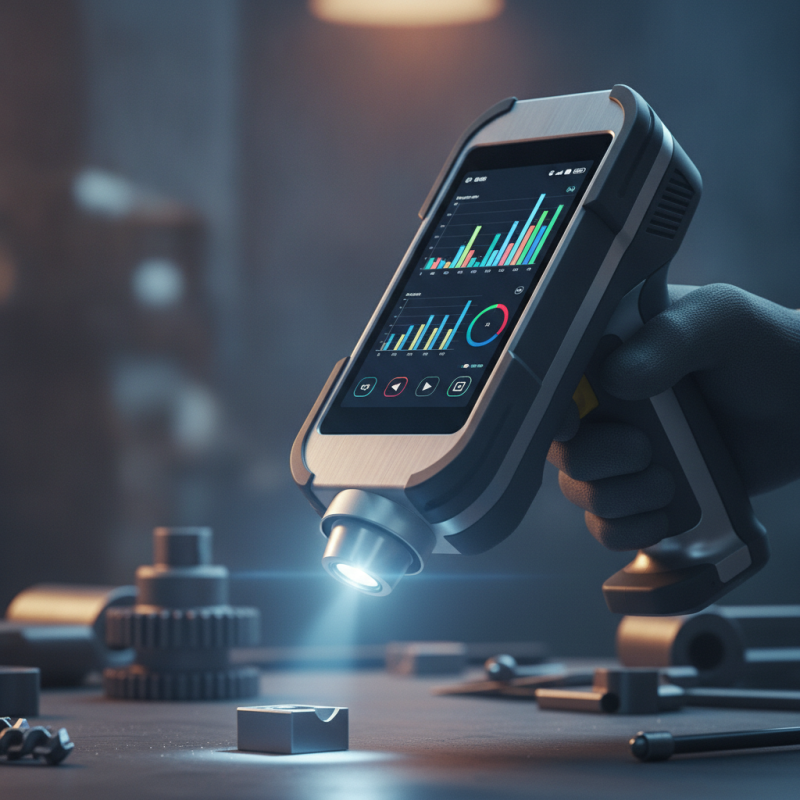
How to Choose the Best Portable Metal Analyzer for Your Needs?
Choosing the right Portable Metal Analyzer can significantly impact your work. This device is essential for various industries, from manufacturing to recycling. Understanding its importance ensures you make an informed decision.
When selecting a Portable Metal Analyzer, consider its accuracy and features. Look for devices with user-friendly interfaces and robust data management. Many models offer real-time analysis, enhancing your efficiency. However, some may lack durability, so verify the quality.
Not all analyzers work for every task. Assess your specific needs carefully. Do you require lightweight options or advanced capabilities? Remember, a perfect choice does not exist. Each model has strengths and weaknesses, requiring thoughtful evaluation.
Understanding Different Types of Portable Metal Analyzers Available Today
When selecting a portable metal analyzer, understanding the various types available is crucial. There are primarily three categories: X-ray fluorescence (XRF) analyzers, optical emission spectrometers (OES), and laser-induced breakdown spectrometers (LIBS). XRF analyzers are great for non-destructive testing and provide quick results. OES is preferable for more precise elemental analysis, typically used in manufacturing. On the other hand, LIBS offers fast results and high sensitivity, making it ideal for certain applications.
Tips for choosing the right analyzer include: assessing your specific needs and application areas. If speed is important, look into XRF devices. However, for high accuracy in metal composition, consider OES. It's essential to think about the environment where the tool will be used. Some analyzers perform poorly in harsh outdoor conditions while others thrive. Evaluating portability and battery life also matters.
Consider training for effective usage. It’s crucial to understand how these analyzers work. Misinterpretation of readings can lead to costly errors. Even the best device won’t yield good results if not operated correctly. Reflect on the support offered and warranty terms. This can save time and frustration in the long run. Taking these aspects into account can lead to more informed decisions.
Key Specifications to Consider When Selecting a Metal Analyzer
When selecting a portable metal analyzer, focus on critical specifications. Precision is paramount. Look for analyzers with a measurement accuracy of ±0.1% or better. Devices with this accuracy can significantly reduce errors in metal composition analysis. According to a recent industry report, analyzers with high precision increase efficiency in recycling and manufacturing sectors.
Portability also matters. The analyzer's weight should ideally be below 5 kg for easy transport. Battery life is crucial, too. A unit with a battery lasting over eight hours ensures reliable usage in the field. Fieldwork can be unpredictable. Therefore, ruggedness should never be overlooked. Devices resistant to shock and moisture typically last longer, offering more dependable data collection.
Additionally, consider user interface and software compatibility. An intuitive design enhances accessibility, especially for new users. Advanced features like real-time data transmission can be beneficial. However, some users find complex systems difficult to operate efficiently. Ensure the device meets your skill level and operational requirements. Balancing these specifications with your specific needs will lead to an informed decision.
Impact of Accuracy and Precision on Metal Analysis Results
Accuracy and precision are crucial in metal analysis. They ensure reliable results, impacting material selection and quality control. When using a portable metal analyzer, consider how these factors influence your overall assessment. A slight variation in accuracy can lead to significant discrepancies in readings, which may affect your project's outcome.
Precision refers to the consistency of results. A precise instrument provides similar readings across multiple tests. This is vital for applications like recycling, where familiar metals are present. However, not all analyzers are built to deliver the same level of precision. A lack of precision can mislead operators, causing them to overlook important metal properties.
Selecting a portable metal analyzer involves understanding your specific needs. Some devices may excel in accuracy but sacrifice portability. Others might be lightweight but lack depth in precision. It's essential to balance these aspects for your operations. The best choice will align with your requirements, ensuring you have reliable data for informed decisions.
Comparative Analysis of Leading Portable Metal Analyzer Brands
When selecting a portable metal analyzer, understanding the competitive landscape is crucial. Recent market research indicates that accuracy, portability, and ease of use are key factors influencing buyer decisions. Brands that deliver high precision tend to attract attention. For instance, an analyzer achieving over 95% accuracy is deemed top-tier within the industry.
Testing capabilities vary significantly among different models. Some analyzers excel in non-destructive testing, while others focus on ruggedness for fieldwork. A report highlights that devices with a weight under 5 kg are increasingly favored by professionals who need mobility. Furthermore, users often report challenges regarding battery life. Portable analyzers with less than 10 hours of operational time can impede workflow efficiency in demanding environments.
Another area of reflection involves data connectivity features. The demand for models with built-in Wi-Fi or Bluetooth capabilities is rising. This trend supports real-time data analysis and seamless integration with other tools. However, not all brands offer reliable software support. Users must consider post-purchase maintenance and software updates, as these factors affect long-term usability and functionality.
How to Choose the Best Portable Metal Analyzer for Your Needs? - Comparative Analysis of Leading Portable Metal Analyzer Brands
| Feature | Option A | Option B | Option C |
| Weight | 1.2 kg | 1.5 kg | 1.4 kg |
| Battery Life | 8 hours | 10 hours | 12 hours |
| Measurement Range | 0.1% - 100% | 0.01% - 100% | 0.1% - 99% |
| Calibration | Automatic | Manual | Automatic |
| Display Type | LCD | LED | LCD |
| Price Range | $1,000 - $1,500 | $1,200 - $1,800 | $900 - $1,300 |
Cost-Benefit Analysis: Evaluating Price vs. Features in Metal Analyzers
Choosing the right portable metal analyzer involves looking beyond the price tag. Many features can significantly impact your work. It’s crucial to weigh how each feature aligns with your specific requirements. For instance, some models prioritize precision while others focus on speed. Do you need results quickly for on-site analysis? Speed may be your priority.
When evaluating price versus features, consider how each feature could improve your workflow. A higher price doesn’t always mean better quality. Sometimes, a mid-range model can meet your needs effectively. It’s essential to do thorough research to understand what those features are and how they play into your day-to-day operations.
Tip: Take time to read user reviews and expert opinions. They can reveal hidden advantages or drawbacks of specific models.
Budget should also guide your decision. A good practice is to set a limit while identifying a range of acceptable prices. This approach helps you find value without overspending. Balancing cost and quality may involve compromise, but it doesn't have to sacrifice effectiveness.
Tip: Assess used models as they can be a cost-effective option. They often provide similar functionality at a reduced price.