
Choosing China’s best Custom Printed Floor mats requires more than comparing logos, colors, and quoted prices. A mat welcomes visitors, collects dirt, protects finished flooring, and represents your brand under constant foot traffic. The wrong choice may curl at the corners, fade near glass doors, or become slippery after cleaning.
Brett Miller, president and CEO of the National Wood Flooring Association, has emphasized, “Floor protection begins with stopping moisture and grit at the entrance.” This principle matters when selecting a Custom Printed Floor mat from a Chinese manufacturer. A sharp design is useful, but performance comes first. Ask about nylon or polypropylene fibers, rubber backing, edging quality, ink durability, and water absorption. Request technical data and a physical sample.
Measure the doorway carefully. Note the direction of traffic, daily visitor volume, trolley movement, and cleaning schedule. A mat placed in a narrow entrance may need a low profile. A busy hotel lobby may require stronger pile density and wider coverage. Check whether the backing suits tile, vinyl, wood, or polished stone. Some materials perform well indoors but deteriorate under direct sunlight.
Do not trust photographs alone. Ask for color samples, production tolerances, wash-care instructions, and packaging details. Independent slip-resistance or wear testing adds confidence, when available. Supplier communication also matters; delayed answers can become delayed deliveries.
No mat is perfect. Even a well-printed design needs routine vacuuming and occasional deep cleaning. The most reliable decision balances appearance, safety, durability, maintenance, and honest supplier evidence. Price still matters, but the cheapest option can become expensive after replacement.
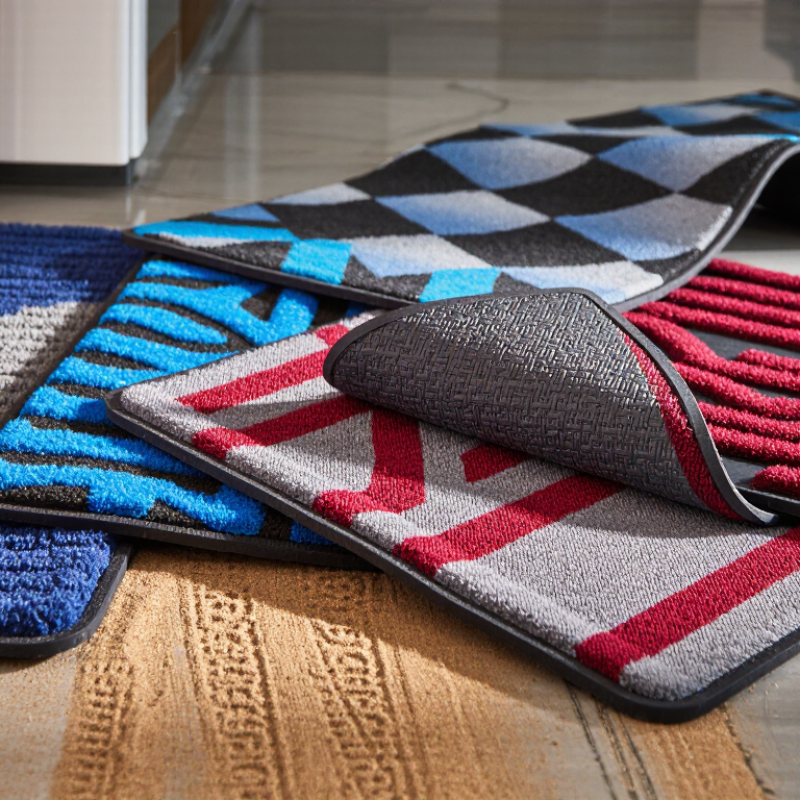
Choosing China’s best custom printed floor mat begins with a clear requirement list. I usually record the entrance size, flooring type, traffic level, and cleaning routine. Measure the doorway twice. Small errors can cause curled edges or blocked doors.
Decide where the mat will be used. An office entrance may need dense nylon fibers and a low profile. A restaurant entrance may require stronger moisture absorption and stain resistance. For outdoor areas, select a backing that tolerates sunlight, rain, and temperature changes. Indoor mats can focus more on softness and detailed printing. Do not judge quality from artwork alone. Ask for material composition, pile height, backing type, edge treatment, and weight per square meter.
Printed colors also need practical testing. Request a physical sample before approving a large order. Check the image under daylight and indoor lighting. Compare the sample with the final design file. Some colors look slightly darker after printing. That detail is easy to miss. Ask about color tolerance, washing performance, packaging, and replacement procedures. A reliable supplier should provide measurable specifications and inspection records. I have seen attractive samples fail because the backing slipped on smooth tiles. That mistake changed my view of “premium” quality. Include anti-slip testing, odor checks, and dimensional inspection in your requirements. Also confirm artwork ownership and safe material declarations before production.
How to Choose China Best Custom Printed Floor Mats?
Material selection affects appearance, comfort, drying speed, and service life. Nylon captures sharp printed details and handles busy entrances well. Polyester costs less, but its colors may fade faster under strong sunlight. Rubber and PVC backings resist moisture, while recycled options need careful odor and durability checks. Choose the surface according to traffic, not only the artwork.
Construction matters more than many buyers expect. Tufted mats feel dense and professional, but they may hold more water. Needle-punched mats dry quickly and suit temporary displays or medium traffic. A molded edge can reduce curling, although poor molding may create a hard trip point. Ask for a production sample. Touch it, bend it, and inspect the corners.
Safety should be tested before bulk production. Check slip resistance on both dry and damp floors. The backing should stay flat on tile, wood, and smooth concrete. Confirm that printing does not create a glossy, slippery surface. Request material specifications, test reports, and washing instructions from the manufacturer. Measurements can vary slightly. I once trusted a digital proof too much, and the final red looked darker indoors. A physical sample would have exposed that mistake. Also verify odor levels, edge stitching, drainage, and packaging before approving the order.
| Mat Option | Face Material | Typical Backing | Common Construction | Water and Soil Performance | Custom Print Suitability | Durability for Foot Traffic | Slip and Safety Considerations | Recommended Applications | Important Selection Notes |
|---|---|---|---|---|---|---|---|---|---|
| Nylon Carpet Mat | Solution-dyed or dyed nylon fibers | Vinyl, thermoplastic rubber, or rubber backing | Tufted or woven face with a low-to-medium pile; edges may be bound or heat-sealed | Excellent soil resistance Absorbs moisture better than polypropylene and helps trap grit when tufted. | Excellent Supports detailed logos, gradients, and repeated graphics with suitable dyeing or printing processes. | Excellent Good resilience and abrasion resistance for entrances, corridors, and commercial interiors. | Choose a heavy, non-slip backing and a beveled edge where the mat meets hard flooring. Verify slip-resistance test data for the intended floor surface. | Corporate entrances, hotels, offices, retail stores, schools, and other high-traffic indoor areas. | Usually costs more than basic polypropylene. Specify colorfastness, pile density, backing adhesion, and dimensional stability. |
| Polyester Printed Mat | Polyester fibers or polyester fabric face | PVC, rubber, or thermoplastic elastomer backing | Printed cut-pile, tufted, or digitally printed textile construction | Good Can hold surface moisture, but performance depends on pile height and fiber density. | Excellent Well suited to photographic images, multicolor artwork, and short-run customized designs. | Good Suitable for light to medium traffic; dense construction improves wear performance. | Use a backing with sufficient grip and select a low-profile design to reduce trip risk. Keep the mat flat and remove curled or damaged edges. | Promotional events, reception areas, exhibitions, offices, homes, and temporary branded displays. | Check print abrasion resistance, colorfastness to cleaning, edge finishing, and whether the backing remains flexible in the operating temperature range. |
| Polypropylene Mat | Polypropylene fibers | PVC, rubber, or latex-free synthetic backing | Needle-punched, looped, or molded textile construction | Good water resistance Low moisture absorption makes it useful for basic dirt and splash control. | Good Works well for simple graphics and economical color designs; very fine detail may be less durable than on nylon. | Moderate Appropriate for light to medium traffic; heavy compression can occur sooner than with nylon. | Backing grip, edge profile, and mat flatness are critical. Avoid using a lightweight mat in areas exposed to wheeled carts or strong pedestrian flow. | Low to medium traffic entrances, utility areas, apartments, temporary campaigns, and budget-focused projects. | Often selected for lower cost and chemical resistance. Confirm resistance to crushing, shedding, UV exposure, and repeated wet cleaning. |
| Rubber Surface Mat | Molded natural rubber or synthetic rubber surface | Integrated rubber base; may include drainage holes | Molded ribs, raised patterns, scraper bars, or open-grid drainage construction | Excellent scraping and drainage Suitable for removing coarse dirt and managing wet conditions when designed with drainage. | Limited Best for molded symbols, recessed logos, or simple one- and two-color applications rather than photographic artwork. | Excellent Strong resistance to abrasion, compression, and demanding entrance conditions. | Heavy weight and textured surfaces can improve stability. Confirm compatibility with the floor because some rubber compounds may stain or discolor sensitive flooring. | Outdoor entrances, industrial facilities, loading areas, workshops, and wet or dirty environments. | Check odor, oil resistance, drainage capacity, temperature range, and whether the rubber is suitable for indoor use and the specified floor finish. |
| PVC-Coated Vinyl Mat | Vinyl surface with printed or embedded design | Solid PVC or PVC foam backing | Flat printed surface, embossed texture, or multi-layer vinyl construction | Good surface moisture resistance Easy to wipe, but a smooth surface may not absorb water effectively. | Excellent Supports vivid graphics, precise shapes, and full-surface digital printing. | Good Suitable for light to medium traffic when the wear layer is sufficiently thick. | Textured surfaces and anti-slip backing can improve traction. Avoid overly smooth finishes in areas regularly exposed to water or grease. | Retail promotions, trade shows, indoor branding, kitchens, service counters, and temporary installations. | Ask for wear-layer thickness, phthalate and heavy-metal compliance where applicable, odor testing, print adhesion, and fire-performance documentation. |
| Coir Fiber Mat | Coconut husk fibers | PVC or rubber backing | Woven, tufted, or needle-punched coarse fiber surface | Moderate moisture handling Effective for scraping dirt, but natural fibers can retain water and require drying. | Limited Usually suitable for simple stenciled or applied designs; detailed full-color printing is not its main strength. | Good Coarse fibers provide effective scraping, though shedding can occur during initial use. | Use a stable backing and secure the mat on smooth floors. Keep it dry and replace it if fibers become loose or the backing curls. | Covered entrances, residential doorways, hospitality settings, and decorative low-to-medium traffic locations. | Natural color variation is normal. Confirm fiber shedding, moisture exposure limits, edge binding, and compatibility with indoor air-quality requirements. |
| Needle-Punched PET Mat | Recycled or virgin polyester staple fibers | PVC, rubber, or thermoplastic backing | Dense needle-punched nonwoven surface, often with a low profile | Good dirt trapping Handles surface moisture reasonably well; drying speed depends on density and backing. | Good Suitable for solid colors, patterns, and selected printed designs. | Good Dense fibers resist moderate traffic and are commonly used for practical entrance protection. | Low pile helps reduce trip risk. Select a backing with reliable floor contact and test movement on polished, wet, or dusty surfaces. | Commercial entrances, public buildings, warehouses, schools, and sustainability-focused projects. | Request recycled-content documentation if required, plus abrasion results, edge strength, backing composition, and cleaning instructions. |
Selection guidance: For high-traffic indoor entrances and detailed custom graphics, dense nylon is generally the strongest all-around option. For vivid short-run artwork, polyester or PVC-coated vinyl is often practical. For heavy scraping and wet conditions, molded rubber is usually more suitable. Actual performance varies with fiber density, pile height, backing compound, floor type, cleaning routine, and installation conditions.
When choosing China’s best custom printed floor mats, inspect the printing quality beyond online photos. Request a physical sample before placing a large order. Check whether small letters remain sharp at close range. Examine color consistency from the center to the edges. Uneven shades can signal weak ink control. Rub the surface with a damp white cloth. Some prints look bright but transfer color easily. That is a warning.
Design flexibility should match your actual space. Confirm available sizes, shapes, borders, patterns, and text layouts. Measure the doorway twice, especially near hinges and corners. A beautiful design is useless if the mat catches the door. Ask whether the supplier can match approved color references. Digital previews may appear brighter than finished mats. Leave room for that difference. Small details matter.
Customization also includes materials and safety features. Compare pile height, backing texture, edge binding, and cleaning requirements. A rubber backing should stay stable on a smooth floor without leaving excessive residue. Request production proofs showing the final artwork, dimensions, and color notes. Keep these records for inspection. During sample testing, place the mat in a busy entrance for several days. Observe curling, fading, trapped dirt, and slipping. My own review standard would not be perfect: minor color variation may be acceptable, but unclear text and unstable backing are not. Reliable suppliers should explain tolerances honestly, provide measurable specifications, and respond clearly when a sample fails.
Choosing China’s best custom printed floor mat supplier requires more than comparing catalog photos and prices. Look for experience with your mat type, artwork, material, and order volume. Ask how many years the factory has produced similar products. Request recent project photos, sample records, and details about monthly capacity. A supplier may claim broad experience, but specific evidence matters more.
Verify certifications carefully. Check the certificate number, issuing body, validity period, and covered factory location. ISO 9001 can indicate a structured quality system, but it does not guarantee perfect mats. Confirm whether materials meet relevant safety and environmental requirements for your target market. Ask for test reports covering colorfastness, odor, backing adhesion, dimensional stability, and slip resistance. Do not accept a scanned document without checking its scope.
Quality control should be visible at every stage. The supplier should inspect fabric, ink, cutting accuracy, edge finishing, and packaging. Request a pre-production sample, then compare it with an approved color reference. Keep written standards for logo size, print position, thickness, and acceptable defects. Small differences happen. They still need review. A polished sample may hide batch variation, so ask for inspection photos from current production. It is also wise to use an independent inspection before shipment. Even experienced suppliers can miss a shade or loose edge, and honest communication about these weaknesses often reveals their real reliability.
How to Choose China Best Custom Printed Floor Mats?
When comparing custom printed floor mats, request itemized quotations rather than one final figure. The price should show material, size, printing method, backing, edging, packaging, and tooling costs. A sample may cost more, but it reveals color accuracy, surface texture, and curling problems before mass production. Ask whether the quote includes export packing and shipping. Otherwise, a cheap unit price may become expensive at your warehouse.
Delivery terms need equal attention. Confirm the artwork approval date, production time, inspection schedule, and estimated transit period in writing. Clarify whether the price covers delivery to your port, warehouse, or another agreed location. Ask about shipping documents, carton markings, and responsibility for delays. A realistic supplier should explain busy-season risks instead of promising impossible speed. Build a few extra days into your plan. I once underestimated customs clearance, and the project missed a store opening.
After-sales service shows how seriously a supplier supports quality. Check the warranty period, response time, replacement policy, and evidence required for damaged goods. A dependable agreement should define acceptable color variation, print defects, odor, and dimensional tolerance. Request photos, inspection records, and batch information when problems occur. Keep a small reserve of mats for urgent replacements. This is not wasteful. It can protect a uniform customer experience. Still, service promises are not enough; test communication with a few practical questions before placing a large order.
Compare indicative pricing, production lead time, first-response time, and warranty coverage before confirming a custom floor mat order.
The benchmark uses common sourcing ranges for custom printed mats made in China. Prices are shown in USD per square meter; delivery refers to typical production time after artwork approval; after-sales performance is represented by response time and warranty coverage. Final terms should always be confirmed in the quotation and sales contract.

Sign up for our mailing list to stay informed and up to date with our latest news and products!
(905) 832 – 0600
2175-A Teston Road
Maple, Ontario
L6A 1T3
(780) 451 – 0238
24790 – 117 Avenue
Acheson, Alberta
T7X 6C2
(604) 882 – 1564
9511 – 194A Street
Surrey, British Columbia
V4N 4G4
(306) 955 – 6005
3926 Arthur Rose Avenue Saskatoon, Saskatchewan
S7P 0C9
(450) 687 – 2721
2750 Rue Bernard-Lefebvre
Laval, Quebec
H7C 0A5