10 Plumbing Fittings Tips for Global Buyers

For global buyers, plumbing fittings are small components with outsized consequences. A mismatched thread can stop installation; an unsuitable seal may leak after repeated temperature changes. Product photos rarely reveal these risks. Buyers need clear specifications, consistent documentation, and practical checks before placing an order.

Plumbing educator and author Dan Holohan is known for emphasizing practical understanding of plumbing systems. The principle guiding this article is: “A fitting is only a good choice when it works reliably in the system it is meant to serve.” This is an editorial paraphrase, not a verified verbatim quotation. It points to a useful habit: assess each fitting in context, not by price or appearance alone.

The ten tips ahead cover material selection, thread compatibility, pressure and temperature ratings, seals, certifications, samples, supplier checks, packaging, and communication. Ask for current datasheets and test documents. Compare the stated thread form with the connection on your drawings. Check that samples match the production specification. Small details matter. Still, no checklist can replace project-specific review; buyers sometimes overlook that, and this guide cannot remove every uncertainty. Use its questions to make supplier conversations clearer and purchasing decisions more dependable.
10 Plumbing Fittings Tips for Global Buyers

Classify 10 Plumbing Fitting Types by Flow Direction and Connection Function

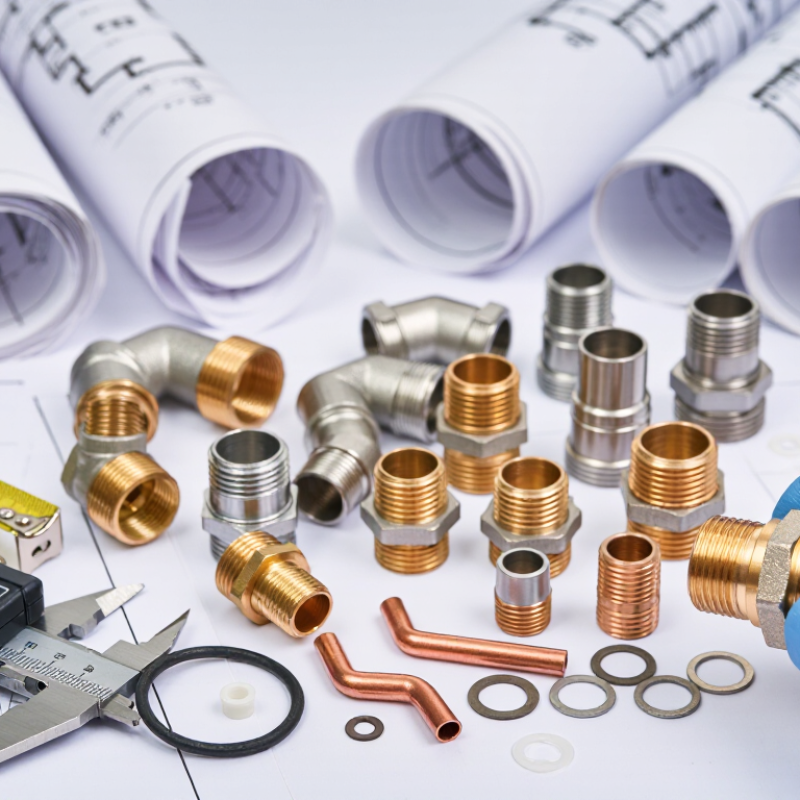
Classify fittings by two questions: Where should water flow, and how should pipes connect? An elbow redirects flow, commonly through 45 or 90 degrees beneath a sink. A tee creates a side branch; a wye adds a swept branch that can reduce abrupt turns. A cross joins four paths, while a reducer changes pipe diameter. These five fittings shape flow direction or route. Their geometry matters: a tight turn may complicate cleaning or maintenance. Not every layout fits the textbook diagram.

Connection function separates five more types. A coupling joins pipe ends, usually of the same size. A union also joins them, but allows later disassembly. An adapter changes connection style, such as threaded to socket. A nipple is a short length of threaded pipe. A cap closes a pipe end; a plug seals an opening in a fitting. Check material compatibility, pressure rating, and flow direction where specified. Small details matter. The U.S. EPA’s WaterSense leak guidance estimates household leaks waste nearly 1 trillion gallons of water annually nationwide. That figure does not blame fittings alone, but it highlights why sound joints and accessible unions matter. In practice, categories can overlap; drawings rarely show every installation constraint.
Compare Materials and Check PVC Pressure Ratings at the 23°C Reference Point

For global buyers, a PVC pressure rating is meaningful only when its reference temperature is clear. ASTM D1785 lists pressure ratings for PVC pipe by size and schedule at 73°F (23°C). Compare like with like: a Schedule 40 figure should not be compared with a different schedule or product standard. Check the fitting’s own rating, too. A pipe-and-fitting assembly is limited by its lowest-rated component. Small print matters.

Temperature changes the usable pressure. The Plastic Pipe Institute’s Handbook of PVC Pipe Design and Construction gives a temperature factor of 1.00 at 73°F and 0.62 at 100°F (38°C) for its listed PVC pressure-pipe guidance. That means a rating cannot simply be carried over to a warmer service condition. Confirm the applicable factor for the exact material, standard, and application; fitting guidance may differ. A sunlit storage yard can heat pipe well above ambient air. Measure the service temperature, not just the room temperature.

Ask suppliers for the standard, nominal size, schedule or pressure class, and temperature basis on the data sheet. Check whether pressure figures are stated in psi or bar, and whether they describe pipe, fittings, or the complete system. I would recheck this before comparing quotations; it is easy to miss. A 23°C reference is a starting point, not a promise of performance at every temperature.

10 Plumbing Fittings Tips for Global Buyers — Compare Materials and Check PVC Pressure Ratings at the 23°C Reference Point

No. Buyer Tip What to Compare Useful Technical Check Practical Buying Action
1 Match the fitting material to the service. PVC-U is commonly used for cold-water systems; CPVC is designed for higher-temperature service than PVC-U; PP-R is used in hot- and cold-water plumbing; PE is commonly used in water distribution. Confirm the product’s permitted fluid, operating-temperature range, and applicable local approvals. Limits depend on the specific product and system. Request the manufacturer’s technical data sheet for the exact fitting material and intended application.
2 Compare corrosion resistance with the water chemistry. Thermoplastics do not rust like carbon steel. Brass and stainless-steel performance depends on alloy composition, water chemistry, and installation conditions. For stainless steel, identify the grade; 316 stainless steel contains molybdenum and generally offers better resistance to chloride corrosion than 304. Check water chemistry and local material restrictions before specifying metal fittings, especially for chloride-rich or aggressive water.
3 Check PVC pressure ratings at the stated reference temperature. Compare the fitting’s stated pressure class or working-pressure rating with the system design pressure. Where the applicable product system uses PN designations, PN 10 and PN 16 indicate nominal pressure classes of 10 bar and 16 bar, respectively. Confirm the governing standard and rating basis. Ask whether the published PVC rating is referenced at 23°C. Do not treat a class value as a universal rating for every PVC fitting or standard.
4 Account for temperature-related pressure derating. Thermoplastic pressure capacity can decrease as operating temperature rises above the rating reference temperature. Derating factors vary by material, product, and standard; there is no single factor that applies to all PVC fittings. Use the product’s temperature-pressure chart for the actual operating temperature, and include surge pressure where relevant.
5 Verify size and dimensional compatibility. Compare nominal size, outside diameter, wall system, and connection dimensions rather than relying on nominal size alone. Metric and inch-based systems may use different dimensions and standards even when nominal sizes appear similar. Confirm the pipe and fitting standard, size series, and dimensional drawings before placing a bulk order.
6 Select the correct joint type. Common connections include solvent-cement socket, threaded, compression, and fusion joints. Joining methods are not interchangeable. PP-R systems commonly use heat fusion; PE systems commonly use butt fusion, electrofusion, or specified mechanical connections. Specify the joint method, compatible pipe end, installation tools, and required joining procedure.
7 Check standards and potable-water approvals. Product standards may cover dimensions, materials, performance, or testing, while drinking-water approvals address suitability for potable-water contact. Examples include ASTM D2466 for PVC socket fittings and ASTM D2467 for PVC pressure socket fittings; verify the edition and market applicability. Request current certificates and confirm that the exact product, material, and size are covered in the destination market.
8 Compare fitting pressure ratings with the connected pipe. The fitting, pipe, joint, valve, and other system components must all meet the design conditions. A system’s allowable pressure is limited by its lowest-rated component under the applicable operating conditions. Check ratings for the exact connection type and size; do not assume all fittings made from the same material have identical ratings.
9 Review installation and chemical-compatibility requirements. Solvent cement, thread sealants, lubricants, and process chemicals must be compatible with the fitting material and service. Installation practices and cure times can depend on material, size, temperature, humidity, and the joining-product instructions. Obtain written installation guidance and confirm compatibility before using chemicals or joining products in the system.
10 Request traceable documentation and inspection details. Compare batch identification, dimensional inspection, pressure-test documentation, packaging, and change-control practices. Test methods and acceptance criteria should match the stated product standard and purchase specification. Agree on required documents, sampling, inspection criteria, and packaging protection before shipment.

Rating note: 23°C is a reference point used by some product data sheets, not a universal basis for every plumbing standard. Confirm the exact fitting’s standard, pressure-rating definition, operating temperature, and manufacturer’s derating data before specifying a system.

Match Threaded Connections: NPT Uses a 60° Thread Form and 1:16 Taper

NPT connections can look interchangeable on a bench, yet a small thread mismatch may cause leaks or damaged fittings. ASME B1.20.1 defines NPT’s 60-degree included thread angle and a 1:16 taper on the diameter.

In practical terms, the diameter changes by 1 unit over 16 units of axial length. That geometry creates interference as the male and female threads tighten. It is not a parallel thread.

Check the thread designation, nominal size, and engagement before assembly. A caliper measurement alone cannot confirm compatibility; a proper thread gauge is more dependable.

Keep the first threads clean, apply a compatible sealing method, and tighten without forcing the fitting. The threads help form the seal, but do not assume they can compensate for poor alignment or damaged surfaces.

Small details matter. ASME’s dimensional requirements provide a useful reference, but field conditions can be less tidy: coatings, wear, and rushed installation may complicate inspection. That deserves a second look.

Never judge a connection by hand feel alone.

Verify Copper-Alloy Solder Fittings Against ASME B16.18

For solder-joint copper-alloy fittings, ASME B16.18 is more than a marking to request. Check that the specified edition covers the fitting type and nominal size, then compare the socket dimensions with the project’s tube requirements. A fitting that looks right may still have an incorrect cup depth or out-of-tolerance opening. Fit matters. Ask for material identification, dimensional inspection records, and traceable documentation; verify that the stated alloy specification matches the purchase order. ASME conformity does not, by itself, establish suitability for every pressure, temperature, or water-service condition.

Supply-chain checks matter too. The USGS Mineral Commodity Summaries 2024 estimated 2023 world copper mine production at 22 million metric tons. That figure describes the wider copper market, not fitting availability or quality, but it underscores why buyers should verify material claims rather than rely on origin statements alone. Check the manufacturer’s inspection records and confirm markings are legible on delivered parts. Check the socket. If samples are available, measure them with suitable gauges and record the results before approving a large order. A rushed review can miss small dimensional mismatches; even experienced teams should revisit their inspection plan when specifications or suppliers change.

Confirm Lead-Free Compliance: NSF/ANSI 372 Sets a 0.25% Threshold

Lead-free compliance deserves a close look before plumbing fittings enter a project. NSF/ANSI 372 sets a maximum weighted average lead content of 0.25% across wetted surfaces. The U.S. Environmental Protection Agency describes the same threshold in its Safe Drinking Water Act guidance. It is not a per-part allowance: a small brass component can affect the calculation. NSF/ANSI 372 assesses lead content, while NSF/ANSI/CAN 61 addresses contaminants that may leach into drinking water. They answer different questions.

Tip: Request the certificate, not just a “lead-free” claim. Match its listed product model and fitting materials to your purchase order. Check the certification scope and current status. Small detail. Big difference.

For a mixed shipment, keep certificates with the lot records and inspect markings on cartons and fittings. Compare the paperwork against the actual alloy and product configuration; substitutions can complicate verification. Still, paperwork can mislead if it covers a similar model rather than the exact item. Ask the supplier to clarify any mismatch before installation. NSF’s published NSF/ANSI 372 criteria and EPA guidance provide useful reference points, but buyers should also confirm requirements for the destination market and application. A quick document check is less painful than tracing an undocumented fitting after the system is assembled.

Request Quote

Sign Up