
Hard Tpu is not a single material grade. It is a family of thermoplastic polyurethanes whose stiffness, resilience, and processing behavior vary with formulation. That difference matters when a business chooses material for a cable jacket, wheel, protective housing, or molded component. A part that feels firm in a sample can still deform under sustained load. A small test piece can hide that.
Grand View Research estimated the global TPU market at about US$2.7 billion in 2023 and projected continued growth through 2030. The estimate covers TPU broadly, not hard grades alone, so it signals market activity—not proof that a particular formulation will suit your product. Michael F. Ashby’s materials-selection principle offers a useful reminder: “Material selection is a key part of the design process.” Buyers should compare grade-specific technical data, not rely on the label “Hard Tpu.”
Look closely at Shore hardness, tensile strength, abrasion resistance, compression set, and chemical exposure. Then ask suppliers how the grade behaves after processing and aging. Request samples. Test them at the actual wall thickness and under realistic temperature and load conditions. Simple, but often skipped.
There is no universal “best” grade. A harder formulation may improve shape retention yet reduce flexibility or impact performance. That trade-off deserves scrutiny. The following ten tips help businesses assess supplier evidence, application needs, production constraints, and long-term consistency before committing to Hard Tpu.
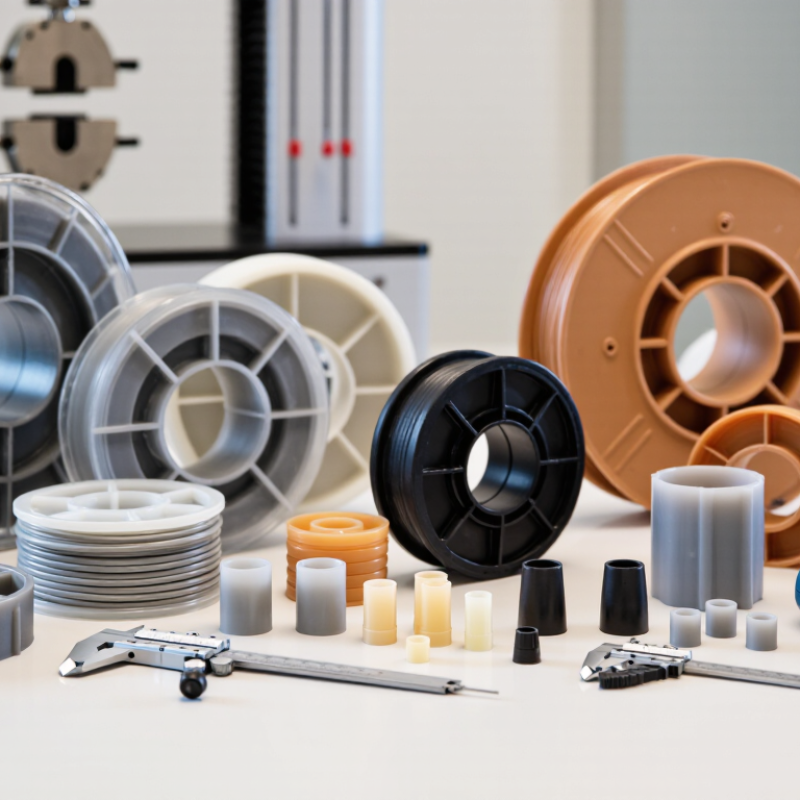
Hard TPU is a rigid form of thermoplastic polyurethane valued for abrasion resistance, impact strength, and flexibility compared with many conventional rigid plastics. Its hardness is commonly measured on the Shore D scale, but the number alone does not predict performance. A molded housing may feel stiff in a warm warehouse yet flex under repeated loading. Details matter. Buyers should assess operating temperature, wall thickness, chemical exposure, and the force parts will actually face.
Its uses include protective equipment, cable components, wheels, and durable industrial housings. MarketsandMarkets estimated the global TPU market at USD 2.8 billion in 2023 and projected USD 3.6 billion by 2028, reflecting demand across applications. That forecast signals opportunity, not guaranteed sales for any one product. For procurement teams, request data on hardness, tensile strength, abrasion, and aging, then test samples under real conditions. Test it first. A specification sheet cannot reproduce a hot production floor, repeated impacts, or a tight assembly fit. Some grades may also require processing adjustments, so pilot runs can reveal costs that laboratory samples miss.
| No. | Selection Tip | What to Evaluate | Practical Decision Guide | Relevant Business Applications |
|---|---|---|---|---|
| 1 | Define the required hardness | Shore hardness, commonly reported on the Shore D scale for harder TPU grades. | Hard TPU grades often fall around 55D–75D, but hardness alone does not predict stiffness or impact performance. Compare candidate grades using the same test method, such as ASTM D2240. | Protective housings, wheels, rigidized grips, and structural flexible components. |
| 2 | Match strength to the load | Tensile strength, elongation at break, tear strength, and stress under the expected load. | Review the grade’s technical data sheet and test specimens under relevant conditions. Select for the actual load profile rather than relying on hardness as a strength indicator. | Conveyor components, cable jackets, mechanical guards, and load-bearing flexible parts. |
| 3 | Check abrasion and wear needs | Abrasion test results, wear rate, surface finish, and contact conditions. | Compare results from the same test method and consider load, speed, surface roughness, and contamination. A published abrasion value is not directly comparable across different test methods. | Industrial rollers, caster wheels, belt components, and wear-resistant covers. |
| 4 | Consider impact and flexibility | Impact resistance, low-temperature behavior, flex fatigue, and part geometry. | Test finished parts at expected service temperatures. Thick sections, sharp corners, and molded-in stress can affect performance even when the resin data looks suitable. | Tool cases, equipment bumpers, protective edges, and reusable industrial fittings. |
| 5 | Evaluate water and hydrolysis exposure | Moisture, hot-water exposure, humidity, and the TPU’s resistance to hydrolysis. | Polyester-based and polyether-based TPU can differ in hydrolysis resistance. For repeated moisture or hot-humid exposure, confirm the grade’s chemistry and validate it in service-like aging tests. | Outdoor equipment, fluid-handling components, footwear parts, and humid-environment seals. |
| 6 | Confirm chemical compatibility | Contact with oils, fuels, cleaning agents, solvents, or process chemicals. | Compatibility depends on both the TPU formulation and exposure conditions, including concentration, temperature, and duration. Request immersion or aging data for the specific chemicals involved. | Industrial hoses, machine covers, connectors, and components exposed to cleaners or oils. |
| 7 | Set the service-temperature limits | Continuous-use temperature, short-term peaks, cold flexibility, and load at temperature. | Use the grade-specific technical data sheet and test parts at both temperature extremes. Do not treat a resin’s thermal transition or melting point as its allowable continuous-use temperature. | Vehicle interiors, appliance components, outdoor hardware, and machinery operating across changing temperatures. |
| 8 | Check processing requirements | Processing method, drying needs, melt behavior, mold design, and shrinkage. | Follow the supplier’s grade-specific processing window. TPU is moisture-sensitive during processing; inadequate drying can cause defects and reduced properties. Confirm settings through production trials. | Injection-molded parts, extruded profiles, tubing, and protective cable coverings. |
| 9 | Verify appearance and outdoor durability | Color consistency, UV exposure, surface finish, and resistance to discoloration or weathering. | Specify color tolerance and appearance criteria, then test representative parts under the expected light and weather exposure. Stabilizers and pigments can affect performance and cost. | Outdoor enclosures, consumer equipment, visible trim, and exterior protective components. |
| 10 | Balance compliance, supply, and total cost | Required regulatory documentation, consistent availability, scrap rate, cycle time, and part-life targets. | Confirm that the exact grade and color meet applicable requirements for the intended market and use. Compare total part cost and validated service life, not resin price alone. | Medical or food-contact-adjacent equipment where applicable, consumer goods, and high-volume industrial products. |
Note: The ranges and guidance above are general selection references, not specifications for every TPU grade. Confirm properties, test methods, processing conditions, and regulatory status with the grade-specific technical data sheet and application testing.