Top 10 Dewaxing Casting Suppliers Worldwide?
Choosing among the Top 10 Dewaxing Casting Suppliers Worldwide requires more than comparing company websites. A polished brochure can hide limited production capacity, inconsistent tolerances, or weak inspection practices. This guide examines suppliers through practical criteria, including casting experience, material expertise, tooling control, surface finish, and delivery performance. Details matter. A small turbine blade, surgical component, or valve body may demand different wax patterns, shell systems, and heat treatments.
Reliable evaluation begins with evidence. Look for documented quality systems, traceable raw materials, calibrated measurement equipment, and clear sampling procedures. Ask whether the supplier can provide dimensional reports, chemical analysis, non-destructive testing, and representative samples. Certifications can support trust, but they do not replace factory visits or technical discussions. That distinction matters.
The companies considered here serve different industries and production scales. Some specialize in stainless steel parts with complex internal passages. Others focus on nickel alloys, carbon steel, or repeat orders with strict consistency. Their strengths may change with batch size, geometry, destination, and required post-processing. A supplier that performs well for prototypes may not support large-volume production efficiently. Conversely, a high-capacity foundry may overlook smaller development projects.
This overview aims to offer a balanced starting point, not an unquestionable ranking. Supplier capabilities change, and published information may become outdated. Buyers should confirm current equipment, lead times, certifications, and export experience before making decisions. A careful comparison can reduce costly revisions and improve long-term cooperation. There are no shortcuts. Good casting partnerships are tested by details, communication, and results.
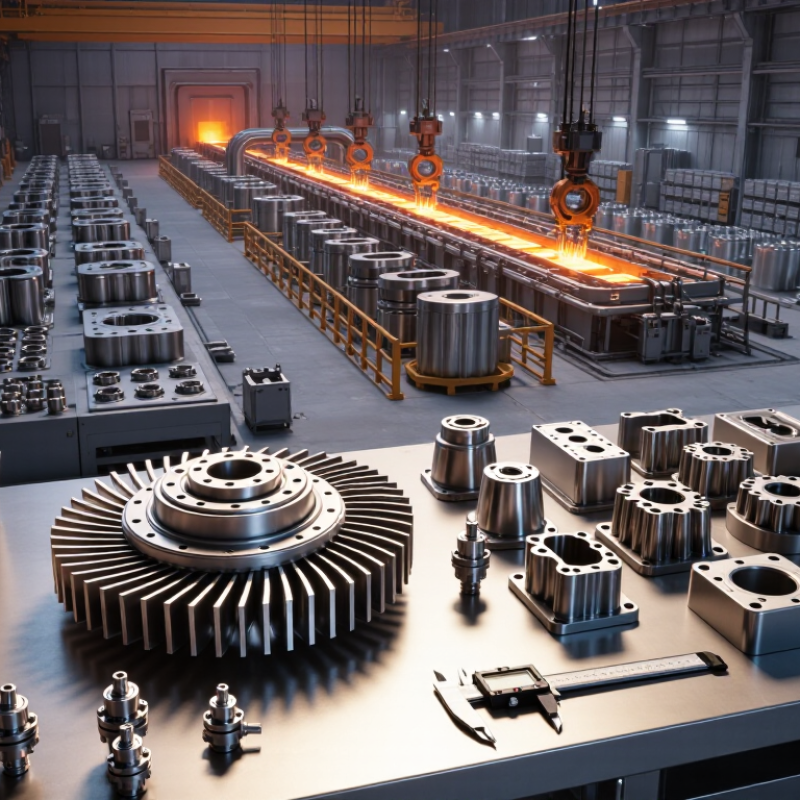
What Is Dewaxing Casting and Why Does It Matter?
Dewaxing casting, often called investment casting, begins with a precise wax pattern. Manufacturers build a ceramic shell around it, then remove the wax with steam, heat, or both. Molten metal fills the empty cavity. This method produces complex shapes, thin walls, internal passages, and sharp details with limited machining.
Why does it matter? The process can reduce material waste and preserve features that traditional cutting may remove. A well-controlled shell also improves dimensional consistency. However, the method is not flawless. A small wax shift can affect wall thickness. Moisture, uneven heating, or poor shell drying may cause cracks, porosity, or incomplete filling. Experienced suppliers monitor wax temperature, slurry viscosity, drying time, firing temperature, and inspection results. Asking for process records is practical, not excessive.
Tips: Request sample inspection data, material certificates, and dimensional reports. Check how each supplier controls wax injection and ceramic shell strength. Clarify whether testing includes visual checks, radiography, or pressure testing. Also ask about minimum wall thickness and realistic tolerances. Catalog claims can sound impressive. Production evidence matters more. A supplier may offer an attractive price, yet repeated repairs can erase the initial saving. I have seen teams focus too heavily on surface appearance and overlook internal defects. That mistake deserves reflection.
Top 10 Dewaxing Casting Suppliers Worldwide? — What Is Dewaxing Casting and Why Does It Matter?
Dewaxing casting, also known as investment casting, uses a wax pattern and ceramic shell to produce complex, high-precision metal parts. The chart below shows typical industrial temperature windows used across key stages of the process.
These are industry-typical operating ranges rather than fixed specifications. Exact settings vary according to wax formulation, shell system, alloy, part geometry, and equipment. Reliable suppliers should demonstrate stable control across these process stages.
How to Evaluate Dewaxing Casting Suppliers Worldwide
Evaluating dewaxing casting suppliers worldwide requires more than comparing prices. In practice, the safest review starts with process evidence. Ask how the supplier controls wax injection, ceramic shell building, dewaxing, and final heat treatment. Request equipment photographs, process records, and sample inspection reports. A capable supplier can explain shell thickness, firing temperature, alloy control, and expected shrinkage without vague claims. Ask for material certificates and batch traceability. Small details matter.
During audits, inspect wax patterns for flash, joints, and trapped air. Check whether operators measure slurry viscosity and shell humidity consistently. Ask to see dimensional reports from coordinate measuring machines, not only visual inspection sheets. Review porosity data, surface roughness, hardness, and repair rates. One sample can look excellent. It may hide an unstable process. Request several production batches and compare results. This is where supplier experience becomes visible. Can you repeat it?
Worldwide sourcing also depends on communication, packaging, and realistic capacity. Confirm drawing revision control, engineering response times, tooling ownership, and shipment protection. A supplier should state monthly capacity and explain peak-season risks. Verify quality credentials through current documents and, when possible, an on-site or independent audit. Customer references should involve similar alloys, sizes, and tolerances. I would not select the lowest quotation before testing a pilot order. My reviews have sometimes overvalued polished presentations. A documented corrective-action record is often more revealing. Leave room for doubt.
Top 10 Dewaxing Casting Suppliers Worldwide? - How to Evaluate Dewaxing Casting Suppliers Worldwide
Anonymized supplier benchmark based on commonly published investment-casting capabilities. Verify current certifications, equipment, capacity, pricing, and references directly with each supplier before making a purchasing decision. | Rank | Anonymized Supplier Profile | Primary Region | Typical Casting Weight | Common Materials | Typical Production Focus | Quality-System Evidence | Indicative Lead Time | Evaluation Score |
| 1 | Supplier Profile A | East Asia | 0.01–25 kg | Stainless steel, carbon steel, tool steel, nickel alloys | High-volume industrial components and complex geometries | ISO 9001 commonly available; confirm certificate scope | 6–10 weeks | 92/100 |
| 2 | Supplier Profile B | Western Europe | 0.02–20 kg | Stainless steel, cobalt alloys, nickel alloys | Aerospace, medical, and high-integrity components | ISO 9001; sector approvals require verification | 8–14 weeks | 90/100 |
| 3 | Supplier Profile C | North America | 0.01–30 kg | Carbon steel, stainless steel, aluminum, nickel alloys | Low-to-medium volume and engineered prototypes | ISO 9001 or AS9100 may apply; verify current status | 7–12 weeks | 88/100 |
| 4 | Supplier Profile D | South Asia | 0.01–18 kg | Stainless steel, carbon steel, copper alloys, nickel alloys | Cost-sensitive export production and repeat orders | ISO 9001 commonly reported; audit evidence recommended | 6–11 weeks | 86/100 |
| 5 | Supplier Profile E | East Asia | 0.02–15 kg | Stainless steel, precipitation-hardening steel, aluminum alloys | Automotive, pumps, valves, and general engineering | ISO 9001; process-control records should be requested | 5–9 weeks | 84/100 |
| 6 | Supplier Profile F | Central Europe | 0.01–12 kg | Stainless steel, tool steel, cobalt alloys | Precision parts with tight dimensional requirements | ISO 9001; ISO 13485 may apply to medical work | 8–13 weeks | 83/100 |
| 7 | Supplier Profile G | Southeast Asia | 0.02–20 kg | Stainless steel, carbon steel, duplex steel | Industrial hardware, marine, and fluid-control parts | ISO 9001 commonly available; verify inspection scope | 7–12 weeks | 81/100 |
| 8 | Supplier Profile H | Southern Europe | 0.01–10 kg | Stainless steel, carbon steel, aluminum alloys | Short-run production and customized components | ISO 9001; request recent audit and inspection records | 7–13 weeks | 79/100 |
| 9 | Supplier Profile I | North Africa | 0.02–16 kg | Stainless steel, carbon steel, brass, bronze | General industrial castings and regional export orders | Certification availability varies; confirm through an audit | 8–14 weeks | 76/100 |
| 10 | Supplier Profile J | Latin America | 0.02–14 kg | Stainless steel, carbon steel, copper alloys | Domestic supply, repair parts, and small-batch production | Quality certification should be validated case by case | 9–15 weeks | 73/100 |
Recommended evaluation criteria: process capability, dimensional tolerance, material traceability, non-destructive testing, wax-pattern quality, shell quality, heat treatment, machining support, minimum order quantity, tooling ownership, delivery reliability, export experience, total landed cost, and corrective-action responsiveness.
Top 10 Dewaxing Casting Suppliers by Capabilities and Markets
Top 10 Dewaxing Casting Suppliers Worldwide?
A credible top-ten list should compare capabilities, not only revenue or factory size. Suppliers with in-house wax injection, ceramic shell production, vacuum melting, and precision machining deserve stronger scores. The 2024 Investment Casting Market Report estimates the global market at more than USD 16 billion, with aerospace, medical, energy, and automotive applications driving demand. Another industrial manufacturing report projects annual growth of about 5% through 2030. These figures suggest expanding demand, but regional performance differs sharply.
The strongest suppliers usually support complex alloys, thin walls, tight tolerances, and repeatable batch production. Aerospace buyers may prioritize traceability and non-destructive testing. Medical manufacturers often need cleaner processes and documented validation. Automotive customers usually value cycle time, tooling cost, and stable high-volume output. A useful ranking can assign 30% to technical capability, 25% to quality systems, 20% to market coverage, and 15% to delivery reliability. The remaining 10% should assess engineering support. That last category is easy to overlook.
Tips: Request sample inspection reports, not only certificates. Ask about wax pattern defects, shell cracking, and machining allowances. Compare results across three production batches. One successful prototype proves very little. Buyers should also verify whether quoted tolerances apply before or after finishing. Reports often hide this distinction. It can change the real cost.
How to Choose the Right Dewaxing Casting Supplier for Your Needs
Choosing the right dewaxing casting supplier requires more than comparing quoted prices. Investment casting can produce complex parts, but process control determines whether that promise survives production. Grand View Research estimated the global investment casting market at about USD 17 billion in 2023, with steady growth expected through 2030. This expansion increases supplier choice, but not necessarily supplier quality. Ask for evidence of wax pattern consistency, ceramic shell strength, alloy traceability, and dimensional inspection. Request sample inspection reports, not only certificates.
Look closely at technical capacity. Can the supplier manage thin walls, internal passages, and difficult stainless or nickel alloys? Does it control furnace temperature, vacuum conditions, and cooling rates? MarketsandMarkets projects strong growth for investment casting through 2028, driven partly by aerospace, medical, and industrial demand. These sectors require repeatability, documented processes, and disciplined non-destructive testing. A capable supplier should explain its control plan in plain language. That matters.
Audit the factory if possible. Examine wax storage, shell drying rooms, finishing areas, and inspection equipment. Check whether corrective actions include root-cause analysis, not vague promises. Ask about capacity during peak orders, tooling ownership, lead times, and packaging protection. A cheaper bid may hide expensive rework. No scorecard is perfect. Supplier selection still involves judgment, especially when communication feels unusually polished but production evidence remains thin. Start with a small validation order and measure actual results against agreed tolerances.