6 Best PVC Pipe Suppliers for Global Buyers

Choosing among the 6 pvc pipe suppliers featured in this guide requires more than comparing unit prices. Global buyers must examine material quality, production consistency, documentation, and delivery performance. A bright catalog can still hide uneven wall thickness or weak packaging. That matters when pipes travel thousands of miles.

Tony Radoszewski, a longtime plastics-pipe industry leader, once put the principle clearly: “A pipe system succeeds when design, material, and installation work together.” His view remains useful for international sourcing. Buyers should check whether each supplier offers suitable PVC compounds, accurate dimensions, pressure ratings, and recognized testing records. They should also confirm compliance with the destination market’s technical requirements. Standards may differ.

Look closely at factory capacity. Ask about resin traceability, batch testing, inspection equipment, and production lead times. Request samples before placing a large order. Test them when the application is critical. Small details matter, including socket fit, pallet strength, labeling, and moisture protection.

Price is only one part of landed cost. Freight, insurance, customs handling, rejected goods, and delayed projects can change the final calculation. Clear Incoterms and written warranty terms reduce confusion. Still, no supplier is perfect. Even experienced exporters may face seasonal delays or communication gaps.

This comparison focuses on practical evidence, not promotional claims. It helps buyers form a shortlist, ask sharper questions, and select a dependable partner for water, drainage, irrigation, or construction projects. The final decision should match local standards, operating pressure, climate, and installation conditions. Depth matters. So does honest checking.
6 Best PVC Pipe Suppliers for Global Buyers

What to Consider When Choosing a Global PVC Pipe Supplier

Choosing a PVC pipe supplier for international projects requires more than comparing unit prices. A reliable supplier should show tested pressure ratings, wall thickness data, and clear production records. Ask for recent batch samples. A sample should feel consistent, not soft or uneven. Request test reports from independent laboratories when possible. Still, paperwork alone is not proof.

Check resin specifications, UV resistance, temperature range, and connection tolerances before placing an order. These details matter when pipes face sunlight, buried soil, or repeated pressure changes. Experienced suppliers explain limits instead of promising universal performance. That honesty matters. Review current certificates and confirm they match the supplied product and applicable market standards. Evaluate export experience through references, response times, packaging photos, and documented shipping procedures. Delays often begin with vague drawings or missing standards.

A capable factory should identify raw-material lots and retain inspection records. Ask how it handles rejected pipes, claims, and design changes. A practical warranty should define coverage, evidence, and response deadlines. Do not ignore production capacity. A supplier may pass a small trial order yet struggle with a container-scale schedule. Run a modest trial shipment and inspect dimensions on arrival. I would also compare total cost, including molds, freight, protective packaging, and replacement risk. Cheapest is not always economical. The uncomfortable lesson is that even careful buyers can miss a hidden assumption.
Overview of the Six Best PVC Pipe Suppliers for International Buyers

Choosing among the six best PVC pipe suppliers requires more than comparing prices. International buyers should examine resin quality, pressure ratings, factory capacity, and export experience. PlasticsEurope reported global plastics production of 400.3 million tonnes in 2022, showing the scale of this industry. PVC remains important in water, drainage, and construction systems.

The strongest suppliers usually provide pipes aligned with ISO 1452 or ISO 4422, depending on the application. Buyers should request test reports for wall thickness, hydrostatic pressure, impact resistance, and dimensional tolerance. A reliable supplier can also explain whether its material is suitable for buried pipelines, exposed installations, or drinking-water systems. Ask for production photographs. Inspect the socket, surface finish, and printed markings.

Delivery performance also matters. The World Bank’s 2023 Logistics Performance Index shows major differences between countries in customs efficiency, infrastructure, and shipment reliability. Therefore, the six shortlisted suppliers should be compared using lead time, container loading plans, packaging quality, and document accuracy. Small details matter, such as capped pipe ends and moisture-resistant bundles. My ranking would not be permanent. Resin costs change, testing results may vary, and a supplier with excellent products may still communicate poorly. Buyers should verify recent samples, not rely only on old certificates or polished websites.

PVC Pipe Products, Specifications, and Industry Applications

6 Best PVC Pipe Suppliers for Global Buyers

PVC pipe selection begins with product specifications, not catalog images. Rigid PVC pipes commonly serve potable water, drainage, irrigation, conduit, and industrial fluid systems. ISO 1452 covers PVC-U pipes for water supply and buried or above-ground applications. ASTM D1785 addresses PVC pressure pipe, while AWWA C900 focuses on larger municipal water lines.

Wall thickness, outside diameter, pressure class, and connection method affect performance. For example, solvent-weld joints suit many building systems, while rubber-ring joints simplify field installation on longer pipelines. A reliable supplier should provide resin-grade information, dimensional tolerances, hydrostatic test results, and certificates from independent laboratories. Small details matter.

Grand View Research estimated the global PVC pipes market at over USD 20 billion in 2023, with continued growth expected through the decade. Market estimates differ between reports, so buyers should not rely on one forecast. More importantly, each project needs traceable testing. A drainage pipe cannot automatically replace a pressure-rated pipe. That mistake is still seen.

For global procurement, strong suppliers should support metric and regional standards, export packaging, color identification, and replacement planning. Ask for sample sections before approving a large order. Check whether fittings, valves, and gaskets match the pipe system. A cheaper pipe may create higher labor costs if joints fail or dimensions vary. This is easy to overlook. Supplier evaluation should include technical response time, batch consistency, and documented quality controls, not price alone.

PVC Pipe Specifications: Schedule 40 Outside Diameter

Typical outside diameters for selected nominal pipe sizes, in inches.

Nominal pipe size is a designation, not the measured outside diameter. The values shown follow ASTM D1785 dimensions for Schedule 40 pipe. Schedule, pressure rating, and suitability vary by size and application; confirm specifications for the intended use.

Quality Certifications, Manufacturing Capacity, and Export Experience

Choosing among six PVC pipe suppliers requires more than comparing quoted prices. Quality certifications should match the product and destination market. Ask for current certificates, their scope, and the issuing body. A certificate alone does not confirm every production batch. Request recent test reports and check whether pipe dimensions, pressure ratings, and material details match your specification. Lot traceability matters. It helps connect a delivered bundle to its production records.

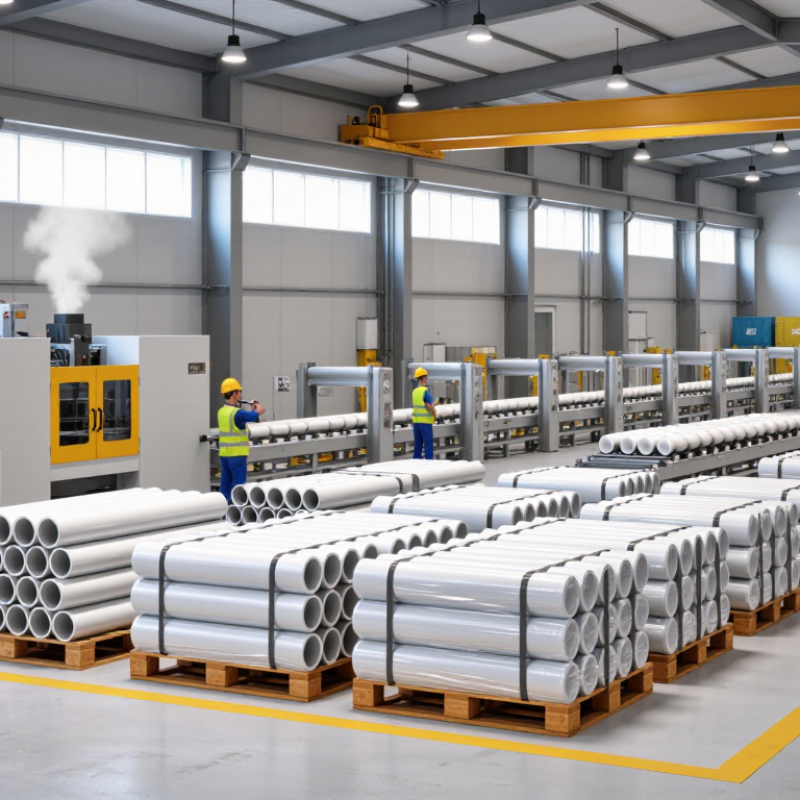
Manufacturing capacity is best judged through evidence, not a large factory photograph. Ask how many extrusion lines are running, what diameters they produce, and how seasonal demand affects lead times. A supplier may report high annual output, yet have little capacity available for your order. No checklist catches every delay. Export experience also deserves specific questions: which regions has the supplier served, and can it provide references or redacted shipping documents? Confirm its ability to prepare packing lists, certificates of origin, and protective export packaging. Inspect how pipe ends are capped and bundles are secured. Small details can prevent damage in transit. I would still allow time for an independent inspection; schedules and paperwork can look tidy while production varies.

How to Compare Prices, Shipping Options, and Supplier Support

PVC pipe sourcing involves more than comparing price per meter. Ask each supplier to quote the same diameter, pressure class, wall thickness, pipe length, and fitting list. Otherwise, a lower figure may reflect a lighter specification, not better value. Check the currency, minimum order quantity, tooling charges, and whether packaging is included. Small differences add up.

Shipping changes the landed cost. Request bundle dimensions, total weight, port options, and estimated production time. Confirm the delivery terms in writing. Ask how pipes are protected against bending, abrasion, and sun exposure during transit. Photos of a packed load can reveal gaps in the plan. Details matter. Compare insurance, customs-document support, and responsibility for damage claims, too.

Test supplier support before placing an order. Send a specific question about dimensional tolerances or test reports, then note the response time and clarity. Ask about batch records, inspection documents, replacement terms, and a contact person after dispatch. A polished brochure is not enough. Some buyers focus heavily on the first quote; understandable, especially with a tight budget. Still, a vague packing plan or slow reply can cost more than a modest price difference. Compare each supplier using the same checklist.

6 Best PVC Pipe Suppliers for Global Buyers - How to Compare Prices, Shipping Options, and Supplier Support

Compare supplier types rather than relying on a universal ranking. Pricing, minimum order quantities, production schedules, and freight costs vary by pipe specification, order size, destination, and market conditions. Confirm current terms directly with each supplier.

Supplier type Typical price position Shipping options to ask about Supplier support to verify Best fit for Key checks before ordering
Large integrated pipe manufacturer Often competitive on repeat, higher-volume orders; request a specification-based quotation. Container-load export; ask for FOB, CFR, or CIF quotations and packaging details. Confirm technical staff availability, inspection records, and export-document support. Importers and infrastructure buyers with predictable demand. Factory audit, production capacity, applicable standards, and batch traceability.
Regional PVC pipe manufacturer May offer lower delivered costs in nearby markets; compare freight and duties as well as unit price. Road, rail, or short-sea freight may be practical depending on location and order size. Check local-language support, delivery planning, and availability of replacement products. Buyers prioritizing shorter routes and regional standards. Confirm that dimensions, pressure ratings, and certification meet local requirements.
Export-focused trading supplier Can consolidate products from multiple producers; compare the full quotation and service scope. May arrange LCL or FCL shipments and coordinate export paperwork through logistics partners. Ask who handles quality inspections, claims, and communication with the actual factory. Buyers sourcing mixed products or needing export coordination. Identify the manufacturing site and verify that certificates apply to the supplied product.
Local distributor or stockist Unit prices can be higher than factory-direct offers, but smaller purchases may avoid large freight and inventory costs. Local collection or domestic delivery; stocked items may be available without international shipping. Check stock levels, cut-to-length services, returns policy, and technical assistance. Small orders, urgent repairs, and buyers needing readily available stock. Confirm product origin, standard markings, pressure class, and stock availability in writing.
Project-focused pipe supplier Pricing is generally quote-based and depends on project specifications, quantities, and delivery schedule. May coordinate phased deliveries, site delivery, or consolidated shipments; confirm any extra charges. Look for submittal documents, schedule coordination, and a named project contact. Contractors and developers with defined project specifications. Match the bill of materials, drawings, pressure requirements, and delivery milestones.
Recycled-material or sustainability-focused producer Pricing depends on feedstock, formulation, and intended application; do not assume recycled content is suitable for every use. Usually quoted through standard freight channels; ask about protective packing and load planning. Request material-content documentation and clear guidance on approved applications. Buyers whose specifications allow verified recycled content. Verify applicable standards, performance data, and suitability for pressure or potable-water service.

Comparison tip: Request like-for-like quotations that state pipe material, nominal size, wall thickness or pressure class, applicable standard, quantity, packing, Incoterm, destination, lead time, and payment terms. Common PVC-U pressure-pipe standards include ISO 1452, ASTM D1785, and ASTM D2241; confirm the precise standard and application required for your market.

Request Quote

Sign Up