Choosing the right pvc flange can determine whether an international piping project remains secure, serviceable, and economical. Global buyers face more than a simple material decision. They must compare socket, threaded, blind, slip-on, and lap-joint flange designs. Each type behaves differently around pumps, valves, tanks, and chemical lines.
Tony Radoszewski, former president and CEO of the Plastics Pipe Institute, has stated, “Plastics piping systems are engineered systems, not just pieces of pipe.” This principle matters when evaluating PVC flanges. A flange that fits perfectly may still fail under excessive pressure, poor alignment, repeated vibration, or unsuitable temperatures. Small details matter. Bolt-hole spacing, gasket compression, wall thickness, and pipe compatibility can change the result.
This guide examines the top pvc flange types selected by global buyers. It considers installation speed, sealing performance, maintenance access, and shipment practicality. Socket flanges may simplify smaller installations, while threaded versions can reduce solvent-welding work. Blind flanges provide reliable closure during testing or future expansion. Slip-on designs often support flexible alignment, but they still require careful assembly.
Cost can mislead.
The lowest quotation may exclude gaskets, bolts, inspection records, or protective packaging. That weakness deserves attention. Buyers should also verify pressure ratings, dimensions, resin quality, testing procedures, and supplier experience before placing large orders. Regional standards may differ, and assumptions can create expensive delays. No flange type is universally best. The correct choice depends on the fluid, operating conditions, joining method, and maintenance plan. A practical comparison helps buyers purchase with greater confidence, although even experienced teams should review their final selection carefully.
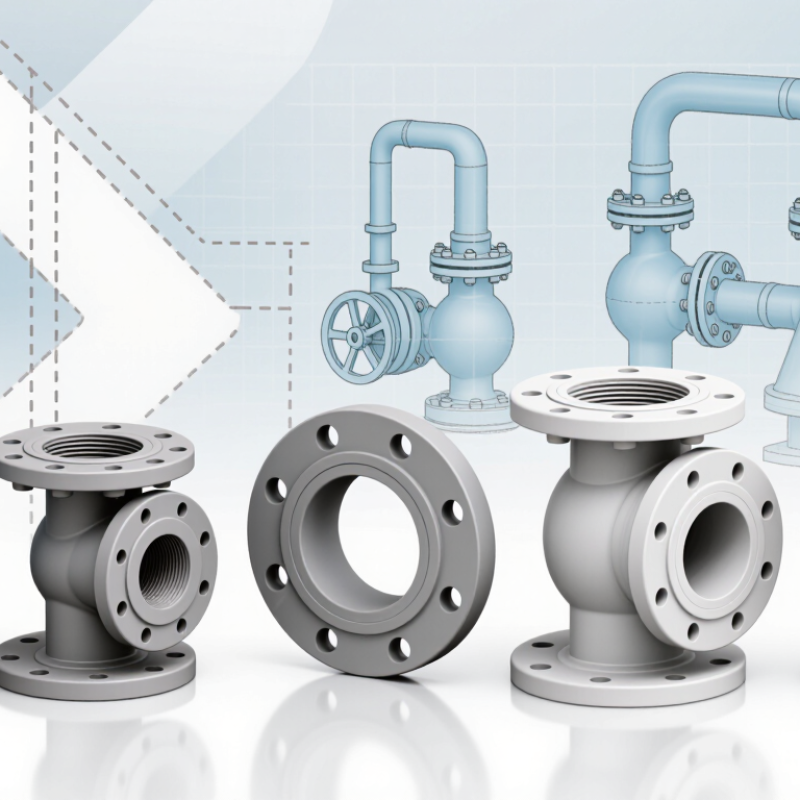
PVC flanges are removable connection points in piping systems. They join pipes to valves, pumps, tanks, and inspection sections. Unlike solvent-welded joints, flanges allow easier maintenance and replacement.
Common types include slip-on, socket, threaded, blind, and lap-joint flanges. Slip-on designs fit over pipe ends and use a gasket with bolts. Socket flanges receive the pipe inside a prepared socket. Blind flanges close an unused branch or isolate equipment during servicing. Threaded types can simplify installation, but they need careful alignment. PVC temperature limits and thread stress deserve attention.
Small details matter.
PlasticsEurope’s Plastics—The Fast Facts 2023 reported that PVC represented 9.6% of European plastics demand in 2022. Grand View Research estimated the global PVC market at approximately USD 42 billion in 2023. These figures reflect PVC’s continuing role in water distribution, drainage, and industrial piping. However, market size does not prove suitability for every application.
Engineers should check pressure ratings, fluid chemistry, temperature, gasket compatibility, and bolt torque. ISO 1452 and ASTM pressure-piping guidance can support material selection. In field inspections, uneven tightening often causes leaks before the flange itself fails. That assumption is too neat. Pipe alignment, support spacing, and thermal movement can matter more than flange type. A blind flange may look simple, yet trapped pressure can create serious maintenance risks. Proper isolation and pressure release remain essential.
PVC flange assemblies are commonly selected as socket flanges, Van Stone lap-joint flanges, blind flanges, or threaded adapter flanges. They provide detachable connections for valves, pumps, tanks, inspection points, and pipeline maintenance. The chart shows commonly specified nominal pressure classes used in PVC pressure piping systems: PN6, PN10, and PN16.
Pressure class values are nominal ratings in bar. Actual allowable working pressure depends on the applicable standard, pipe and flange design, operating temperature, joint method, and service medium. Always verify the technical documentation before selection.
PVC flanges connect pipes, valves, pumps, and tanks without permanent bonding. Slip-on flanges remain common because they fit over pipes and simplify alignment. They suit water treatment, irrigation, and many low-pressure systems. Blind flanges close unused lines during maintenance or future expansion. Threaded flanges help where solvent welding is unsuitable, although careful tightening is essential. Over-tightening can damage the flange face or create hidden stress.
Socket flanges provide a compact connection for smaller pipe sizes. Reducing flanges connect different pipe diameters and can save space in crowded installations. Global buyers should compare pressure ratings, operating temperatures, pipe dimensions, and drilling standards. Chemical compatibility also matters. PVC performs well with many aqueous chemicals, but not every chemical application is suitable. A qualified engineer should confirm the material chart and installation method. Small differences matter.
Tips: Check the flange face before installation. It should be clean, flat, and free from scratches. Use the correct gasket and tighten bolts in a cross pattern. Field experience shows that uneven tightening causes many avoidable leaks. Also inspect packaging for warping after long transport. No guide is flawless. Local conditions still deserve a careful review.
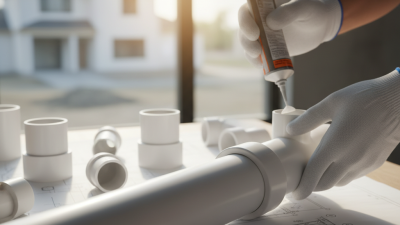
Choosing a PVC flange is not only about diameter or price. The connection method must suit the piping application, pressure, temperature, and maintenance plan. For fixed water lines, a socket flange adapter with solvent-cement joining can provide a clean, compact connection. It requires careful pipe preparation. Dust or uneven insertion can weaken the joint.
A slip-on or Van Stone-style flange is useful when workers need easier bolt-hole alignment. The loose backing ring can rotate around the pipe, which helps during installation in tight plant rooms. Use it where regular inspection or equipment removal is expected. For pumps, filters, and valve assemblies, this flexibility can save maintenance time. A blind PVC flange closes an unused branch or pipe end. It should match the system’s pressure rating and include a suitable gasket.
Threaded PVC flanges can connect to metal components, but mismatched threads and excessive tightening remain common problems. Use compatible thread sealants and avoid forcing the connection. Chemical service needs extra checking, even when PVC appears suitable. Temperature, concentration, and exposure time can change performance. I have seen specifications focus on flange type while overlooking bolt torque and gasket compression. That is a costly gap. Check the pipe standard, facing dimensions, gasket material, and support arrangement before installation. A technically correct flange can still fail when the surrounding piping carries its weight.
Global buyers usually compare PVC flanges by material, pressure rating, and connection method. The choice is not merely about price. PVC-U suits many ambient-temperature water systems, while CPVC offers better heat resistance. ASTM D1784 classifies rigid PVC compounds by strength and impact performance. ISO 1452 also defines requirements for PVC-U pressure piping systems. These standards give buyers a stronger basis than a supplier’s simple “industrial grade” claim.
Pressure ratings require careful reading. PN10 and PN16 flanges are common in metric markets, while Class 150 appears in many imperial systems. However, the rating can fall as temperature rises. The gasket, bolts, pipe wall, and flange face must also match. Grand View Research estimated the global PVC pipes market at about USD 53.7 billion in 2023, with continued growth expected through 2030. That scale increases product variety, but it can also increase specification confusion. Bigger markets do not guarantee better components.
Connection style changes installation risk. Socket flanges provide a compact solvent-welded joint. Loose-ring flanges can simplify alignment and reduce stress during maintenance. Threaded designs may help in limited installations, but they need careful torque control. Blind flanges close unused pipe ends and support testing or future expansion. In practice, buyers sometimes select a flange from nominal size alone. That is a weak shortcut. Check pipe outside diameter, drilling pattern, gasket dimensions, chemical exposure, and operating temperature before approval. An independent pressure test remains valuable, even when paperwork looks complete.
Global PVC flange buying starts with standards, not catalogue names. Common options include socket flanges, spigot flanges, threaded flanges, and backing-ring assemblies. Socket designs suit solvent-welded PVC-U lines. Spigot and stub-style designs support easier dismantling. Threaded versions need careful torque control. They can crack under over-tightening.
ISO 1452 covers PVC-U pressure piping systems, while regional projects may specify EN ISO 1452, ASTM requirements, or local water codes. These references are not interchangeable. Grand View Research’s 2024 Plastic Pipes Market report valued the global market at about US$43.6 billion in 2023. PlasticsEurope reported 413.8 million tonnes of global plastics production in 2023. These figures cover wider plastics markets, not flanges alone. Still, they show why consistent specifications matter.
Before approval, match nominal size, pressure rating, temperature, drilling pattern, gasket face, and bolt material. Confirm whether drilling follows ISO, EN, ASME, or another project standard. Check hydrostatic test records, resin identification, batch traceability, and UV exposure data. A 110 mm flange with the wrong bolt circle is unusable. In procurement reviews, buyers often focus on pressure class and overlook chemical concentration or thermal cycling. That is a costly blind spot. Request a dimension drawing and certificate before comparing prices. It slows the first email. It prevents many installation problems.
A practical comparison of common PVC flange configurations, international dimensional systems, connection methods, pressure considerations, and key purchasing criteria.
| PVC Flange Type | Connection Method | Typical Application | Common Dimensional or Drilling References | Typical Pressure Designations | Main Advantages | Important Selection Considerations |
|---|---|---|---|---|---|---|
| Slip-On Flange Adapter | Socket or spigot connection to a PVC pipe, usually with a separate backing ring and gasket | Water distribution, chemical lines, irrigation, wastewater, and general industrial piping | ASME B16.5 Class 150 drilling is widely requested in North America; PN10 or PN16 drilling is common in European and other ISO-influenced markets. |
PN10 / PN16 Class 150 |
Fast installation, economical design, and convenient alignment during assembly | Confirm whether the flange face, bolt circle, and backing ring follow ASME, EN, ISO, or JIS dimensions. The pipe socket or spigot must match the selected pipe standard. |
| Vanstone-Style Flange Adapter | Loose rotating flange face combined with a fixed PVC stub or flange adaptor | Large-diameter systems, equipment connections, valve connections, and installations requiring bolt-hole alignment | Usually supplied with a rotating backing ring drilled to ASME, EN, ISO, or JIS patterns |
PN10 / PN16 Class 150 |
Allows bolt-hole rotation, reduces installation difficulty, and helps prevent excessive pipe movement during alignment | Use a full-face or suitable raised-face gasket according to the mating flange design. Verify the ring material, corrosion resistance, and allowable bolt torque. |
| Socket-Weld PVC Flange | Pipe inserted into an integral socket and joined by solvent cement | Small- and medium-diameter low-temperature pressure piping | Flange drilling may follow ASME B16.5, EN 1092-1, ISO, or JIS requirements; socket dimensions must match the applicable PVC pipe system |
System-specific Often PN-rated or Class 150-pattern |
Compact construction, simple solvent-cement assembly, and no threaded joint inside the pipe bore | Use only compatible PVC pipe, primer, and solvent cement. Joint preparation, curing time, temperature, and chemical compatibility directly affect performance. |
| Threaded PVC Flange | Female or male tapered pipe thread, commonly connected to a threaded pipe or fitting | Instrumentation branches, removable equipment connections, low-flow utility lines, and maintenance points | Thread requirements should be specified separately, such as ASME B1.20.1 NPT or ISO 7-1 BSPT; bolt-hole drilling may use a different standard |
Low to moderate duty Manufacturer-specific rating |
No solvent-cement curing is needed and the connection can be disassembled | Avoid excessive tightening because plastic threads can crack or deform. Check thread form, sealant compatibility, temperature, vibration, and pressure derating. |
| Blind PVC Flange | Solid flange plate bolted to a mating flange to terminate or isolate a pipeline | Pipe-end closures, pressure testing, maintenance isolation, tank nozzles, and future system extensions | Bolt-hole pattern normally follows the mating system, such as ASME B16.5, EN 1092-1, ISO, or JIS |
PN10 / PN16 Class 150 |
Provides a removable closure and simplifies future expansion or equipment maintenance | Blind flanges experience end thrust from internal pressure. Check the allowable pressure, gasket seating, bolt load, and hydrostatic-test requirements. |
| Reducing PVC Flange Adapter | Flanged connection on one side with a smaller socket, spigot, or transition bore on the other side | Connecting different pipe sizes, pumps, valves, tanks, and process equipment | Flange drilling and face dimensions should match the larger connection; reduction dimensions must match the selected pipe standard |
System-specific Commonly PN-rated or Class 150-pattern |
Combines size transition and flanged connection in one component, reducing the number of fittings | Check flow-area changes, pressure loss, concentricity, wall thickness, and the manufacturer’s pressure rating for the reduced configuration. |
| Flange Spigot or Stub-End Assembly | Plain spigot or stub end inserted into a loose backing ring and sealed with a gasket | Large-diameter water, wastewater, chemical, and industrial systems where alignment flexibility is useful | Backing ring drilling may follow EN 1092-1 PN10/PN16, ASME B16.5 Class 150, ISO, or JIS patterns |
PN10 / PN16 Class 150 |
Good alignment flexibility, reduced installation stress, and easy replacement of the backing ring | Use the correct stub-end length and gasket position. The backing ring carries the bolt load; the PVC spigot should not be treated as a metal flange. |
| CPVC Flange | Socket, spigot, or threaded connection made from chlorinated PVC compound | Hot-water systems and selected chemical-process applications where PVC-U temperature limits are insufficient | Flange drilling may follow ASME, EN, ISO, or JIS patterns; the CPVC compound and joint system must be specified |
Temperature-dependent Manufacturer-specific rating |
Higher temperature capability than standard PVC-U in many applications | Do not substitute CPVC for PVC-U without checking chemical compatibility, thermal expansion, solvent cement, gasket material, and pressure derating. |

Sign up for our mailing list to stay informed and up to date with our latest news and products!
(905) 832 – 0600
2175-A Teston Road
Maple, Ontario
L6A 1T3
(780) 451 – 0238
24790 – 117 Avenue
Acheson, Alberta
T7X 6C2
(604) 882 – 1564
9511 – 194A Street
Surrey, British Columbia
V4N 4G4
(306) 955 – 6005
3926 Arthur Rose Avenue Saskatoon, Saskatchewan
S7P 0C9
(450) 687 – 2721
2750 Rue Bernard-Lefebvre
Laval, Quebec
H7C 0A5