Why Choose a Reliable Vape Manufacturer?
Choosing a reliable Vape Manufacturer is not simply a purchasing decision. It is a quality and responsibility decision.
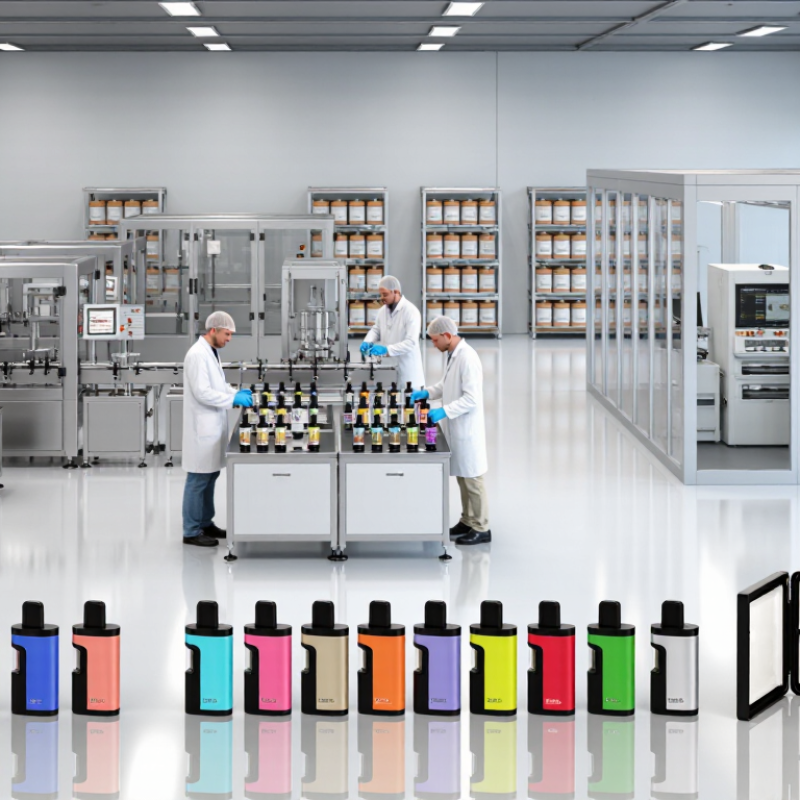
A dependable partner builds products through documented processes, controlled materials, and repeatable testing. Their facility should show clear batch records, calibrated equipment, trained technicians, and hygienic production areas. You should be able to ask where components come from. You should also receive evidence of testing for composition, contaminants, leakage, and electrical safety.
Details matter.
A loose seal, inconsistent heating element, or poorly stored liquid can damage customer trust quickly. Reliable manufacturers investigate these problems instead of hiding them. They explain corrective actions in clear language. They also respect the regulations of each market and avoid unsupported health claims.
Dr. Konstantinos Farsalinos, a recognized researcher in vaping science, has said, “Quality control is essential for the safety of electronic cigarettes.” This principle remains practical for every serious Vape Manufacturer.
Experience provides useful judgment. However, experience alone is not enough. A factory may have years of production history and still need better traceability. That uncomfortable point deserves attention. Audits, independent laboratory reports, and transparent communication offer stronger evidence than polished brochures.
The best manufacturer relationship feels measurable. You can track samples, review specifications, confirm packaging details, and discuss product changes before shipment. If a supplier avoids simple questions, treat that as a warning.
Reliability is built slowly. It appears in clean records, stable performance, honest limitations, and consistent support. Choosing carefully protects product quality, business reputation, and responsible market participation.
Industry Context: 2.13 Million U.S. Students Used E-Cigarettes in 2023 (CDC)
Why Choose a Reliable Vape Manufacturer?
In 2023, 2.13 million U.S. middle and high school students reported current e-cigarette use. The CDC and FDA reported this figure through the National Youth Tobacco Survey. Among high school students, use reached 10.0%. Among middle school students, it reached 4.6%. These figures make manufacturing responsibility more than a quality issue. It becomes a public health concern.
A reliable manufacturer should document every production batch. Independent laboratory testing can verify nicotine levels, ingredients, and potential contaminants. Clear records should connect raw materials with finished products. Quality teams should also check leakage, battery performance, labeling accuracy, and child-resistant packaging. The FDA and CDC reported that disposable devices represented 60.7% of current student use in 2023. That detail highlights the need for careful design, controlled distribution, and strong age-protection procedures.
Certificates alone are not enough. A polished document can still hide weak controls. Manufacturers should welcome audits, retain test results, and explain corrective actions openly. No system is perfect. Mistakes can happen. The real test is how quickly a company detects, reports, and fixes them. Responsible partners also follow applicable laws in each market and avoid youth-oriented flavors, imagery, or promotion. This standard requires experience, technical discipline, and honest self-review.
Regulatory Capability: FDA Had Authorized Only 34 E-Cigarette Products by 2025
By 2025, the FDA had authorized only 34 e-cigarette products. This narrow figure shows how demanding regulatory review can be. A reliable vape manufacturer must understand the Premarket Tobacco Application process, not simply mention “FDA compliance” in sales materials. It should maintain clear ingredient records, production controls, laboratory reports, and product identity documents.
Regulatory capability appears in daily details. Can the manufacturer trace a batch from raw materials to finished cartons? Can it explain testing methods for nicotine strength, emissions, and contamination? Are records updated when formulas or suppliers change? These questions matter when distributors request evidence or regulators inspect a facility. Experience also matters. Teams should know how to prepare technical files, respond to review questions, and manage corrective actions without hiding weaknesses.
No compliance system is flawless. Mistakes happen.
A dependable manufacturer documents them, investigates the cause, and improves the process. It should also check age-control procedures, packaging requirements, and market-specific rules before shipment. FDA authorization applies to specific products and conditions; it is not a universal license for every market. A careful supplier avoids exaggerated claims and provides verifiable records instead. That level of restraint may seem less impressive than aggressive promises, but it offers better evidence of professional judgment. Reliable production is visible in signed batch records, calibrated equipment, controlled storage, and staff who can answer difficult questions with precise, consistent information.
Engineering Safety: Require UN 38.3 and IEC 62133 Battery Testing
Why Choose a Reliable Vape Manufacturer?
Engineering safety starts with battery evidence, not attractive packaging. A reliable manufacturer requires UN 38.3 testing for every applicable battery design. This standard examines transport risks through altitude simulation, temperature changes, vibration, shock, and external short-circuit testing. Additional checks may assess overcharge, impact, crush, and forced discharge conditions.
IEC 62133 adds a deeper safety layer for rechargeable cells and battery systems. Its testing reviews electrical, mechanical, and abuse-related risks during expected use. Engineers should examine protection circuits, insulation, charging limits, and enclosure strength. Small details matter. A loose connector or weak seal can create serious problems during repeated charging. Testing should involve production-representative samples, not only carefully selected prototypes.
Reliable manufacturers keep test reports, sample identifiers, revision histories, and batch records available for review. These documents help connect a finished device to its tested battery configuration. During supplier audits, I look for traceability from cell delivery to final inspection. However, paperwork alone is not enough. A valid report cannot guarantee every later production batch remains identical. This is where continuous quality checks become essential. Some factories still treat certification as a final step, which deserves careful reflection. Safety engineering works better when testing, manufacturing, and corrective action remain connected.
Why Choose a Reliable Vape Manufacturer?
Engineering Safety: Require UN 38.3 and IEC 62133 Battery Testing
UN 38.3 defines eight transport-safety tests for lithium cells and batteries: altitude simulation, thermal test, vibration, shock, external short circuit, impact or crush, overcharge, and forced discharge. IEC 62133 evaluates portable rechargeable battery safety through electrical, mechanical, thermal, and abnormal-use requirements. Requiring both standards helps manufacturers address transport risks and product-use safety before shipment.
Supplier Reliability: Compare Defect, Delivery, Audit, and Recall Metrics
A reliable vape manufacturer proves consistency through measurable supplier data. Start with defect rates, not attractive samples. Request first-pass yield, batch rejection rates, complaint trends, and corrective-action closure times. ISO Survey 2022 recorded 1,265,216 ISO 9001 certificates worldwide, but certification alone cannot guarantee production quality. A spreadsheet can look perfect and still hide weak sampling. Ask for lot-level records, retained samples, and independent laboratory results.
Delivery reliability needs equal attention. Compare on-time, in-full delivery across at least six months. The World Bank’s 2023 Logistics Performance Index evaluates timeliness as one of six core logistics dimensions. Request promised dates, actual arrival dates, partial shipments, and delay causes. A supplier reporting 98% on-time delivery may exclude late components. That detail matters. Audit performance also deserves evidence. Review audit scope, open findings, closure dates, and repeat observations. Prefer unannounced or independent audits when practical.
Tips:
Build a simple scorecard. Weight defects, delivery, audits, and recalls separately. Check recall frequency, affected lots, response speed, and customer notification records. FDA recall guidance emphasizes traceability, documented evaluation, and corrective action. Do not treat zero recalls as automatic proof of safety; under-reporting remains possible. Ask for a mock recall exercise, then measure how quickly the supplier can identify affected batches. My own preference is clear: a transparent supplier with one documented failure may be more credible than a supplier claiming perfection.