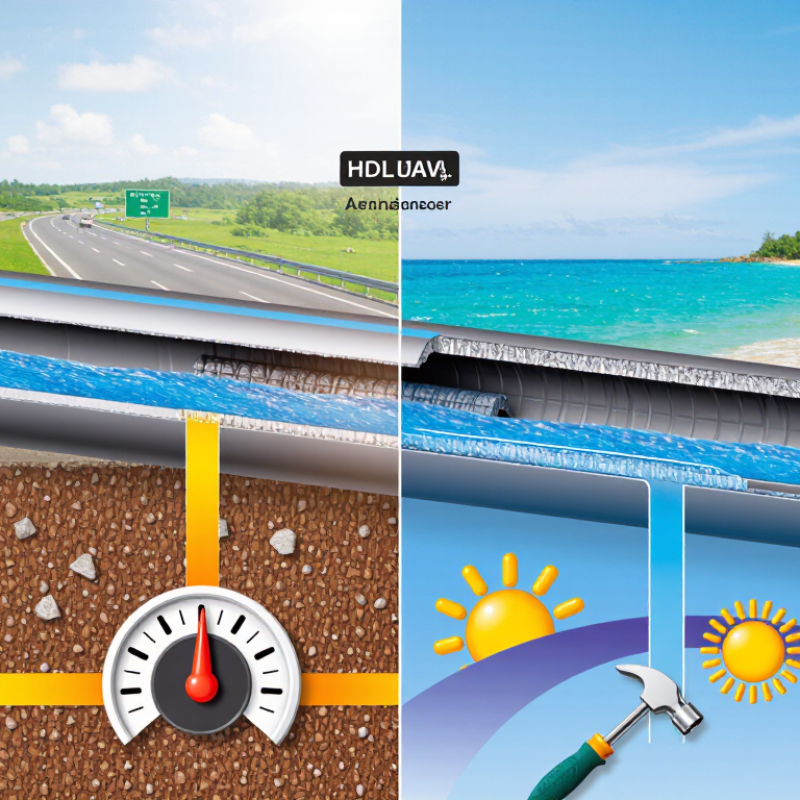
Choosing the best HDPE pipe for global projects requires more than comparing pressure ratings or purchase prices. Soil chemistry, operating temperature, surge pressure, ultraviolet exposure, and installation quality can change the final decision. A pipe that performs well beneath a European highway may need different protection beneath a tropical coastline. The details matter.
The Plastics Pipe Institute’s Handbook of Polyethylene Pipe reports that properly designed polyethylene systems can provide a service life exceeding 100 years under suitable operating conditions. ISO 4427 also defines requirements for polyethylene piping used in water supply and pressure applications. These references support HDPE pipe as a durable option, but they do not remove the need for engineering judgment. The wrong resin grade, joining method, or wall thickness can still create expensive failures.
David Fink, a recognized Plastics Pipe Institute leader, offers a practical industry reminder: “Design the system, not just the pipe.” That sentence deserves attention. The best HDPE pipe is not always the thickest or cheapest product. It should match the project’s pressure class, SDR, PE compound, diameter, jointing method, and local installation capability. Fusion quality is especially important when crews work far from laboratories and major service centers. A weak joint can undermine excellent material.
There is no universal winner. Global specifications, verified testing, traceable production, and trained installers should guide selection. Even respected reports have limits. Field conditions can be messier than design models. A reliable decision combines standards, supplier evidence, and lessons from comparable projects. That is where performance becomes more than a catalogue claim.
What Is the Best HDPE Pipe for Global Projects?
HDPE Pipe Basics for Global Infrastructure Projects
HDPE pipe selection begins with service conditions, not price. Engineers should check pressure, temperature, fluid quality, soil movement, and installation methods. The 2023 WHO/UNICEF Joint Monitoring Programme reported that 2.2 billion people lacked safely managed drinking water in 2022. This gap increases the need for dependable networks in difficult environments.
Pipe grade matters. ISO 4427 covers polyethylene piping systems for water supply, including dimensions, performance, and testing. ASTM F714 uses outside diameter and dimension ratios to classify polyethylene pipe. A lower SDR generally means a thicker wall and higher pressure resistance. It can also increase material use and transport weight. The best balance depends on hydraulic demand and project life.
Fusion quality deserves equal attention. Clean pipe ends, controlled heating, correct alignment, and documented cooling times reduce joint risks. Field crews should record temperature, pressure, machine settings, and operator qualifications. Small errors matter. A buried defect may remain invisible for years.
Global projects also need practical planning. Confirm local standards, available fittings, inspection capacity, and repair procedures before shipment. Protect pipe from sharp stones, excessive sunlight, and poor stacking. The United Nations World Water Development Report 2023 noted that global water demand could rise by 20–30% by 2050. That makes long-term capacity important, though forecasts cannot replace site-specific engineering. A spreadsheet is not enough. Measure twice.
The best HDPE pipe is not chosen by pressure rating alone. Regional standards define dimensions, testing, joining, and acceptable materials. In Europe and many international projects, ISO 4427 and EN 12201 guide polyethylene water systems. North American designs often reference ASTM F714 for dimensions and AWWA C906 for pressure applications. These documents are not interchangeable.
Material classification matters. PE100 is common under ISO-based systems, while PE4710 appears in North American specifications. Engineers should compare MRS values, SDR, hydrostatic design stress, and operating temperature. A buried water pipe may need pressure resistance and slow-crack-growth performance. It also requires verified fusion procedures. For exposed installations, UV stability and thermal movement deserve equal attention. Small details matter.
Australia and New Zealand commonly use AS/NZS 4130, while Japan may apply JIS K6760. Local approvals can control potable-water contact, marking, colors, and test certificates. Project reviews often reveal unsuitable documents. One pipe may meet the material requirement but fail the contract’s test method. That mistake is avoidable. I recommend a regional compliance matrix before purchasing. It should list resin grade, SDR, dimensions, joint qualification, pressure testing, and certificates. No universal pipe wins every climate or code.
What Is the Best HDPE Pipe for Global Projects?
Comparing HDPE pipe materials begins with the resin classification, not the color or surface finish. PE100 and PE4710 materials offer strong durability, chemical resistance, and long service life. However, their ratings follow different regional standards. Check certified test data, hydrostatic design basis, and approved manufacturing controls. A lower-cost resin can become expensive if its performance evidence is incomplete.
Size selection requires more than matching the required flow. Confirm the outside-diameter system, such as ISO or IPS, because dimensions may not align. Calculate flow velocity, friction loss, trench conditions, and future capacity. SDR is equally important. A lower SDR usually means a thicker wall and higher pressure capability. Small errors here can affect fittings, fusion equipment, and installation clearance.
Pressure ratings must reflect real operating conditions. Review working pressure, surge pressure, temperature, fluid density, and cyclic loading. Ratings commonly reference a specific temperature, often 20°C, so warm-ground installations may require derating. Site inspections should verify fusion records, pipe ovality, scratches, and unsupported spans. A spreadsheet may look exact, but field data can disagree. I would also question any selection based on pressure rating alone. Soil movement, poor backfill, and sudden valve closure can shorten service life, even when the pipe appears technically compliant.
Comparison of nominal pressure ratings for PE100 HDPE pipe at 20°C across common Standard Dimension Ratios (SDR).
Lower SDR values have thicker walls and higher pressure capacity. The values shown are typical PN ratings calculated for PE100 pipe using an MRS of 10 MPa and a design coefficient of 1.25 at 20°C. Actual project selection should also consider temperature, surge pressure, installation conditions, and the applicable local standard.
What Is the Best HDPE Pipe for Global Projects?
Installation conditions often matter more than the pipe catalog. A coastal project needs resistance to saltwater, aggressive soil, and ultraviolet exposure. A mountain site may require lighter pipe sections and flexible alignment. The UN World Water Development Report 2024 estimates that agriculture uses about 70% of global freshwater withdrawals. This makes reliable irrigation installation especially important in remote locations.
Pipe selection should follow pressure, temperature, diameter, and soil conditions. ISO 4427-2:2019 defines dimensional requirements for polyethylene pipes used in water systems. ASTM F714 covers large-diameter polyethylene pipe, including sizes from 90 mm to 1,600 mm. These standards help engineers compare SDR values and wall thicknesses consistently. Still, site measurements must guide the final choice.
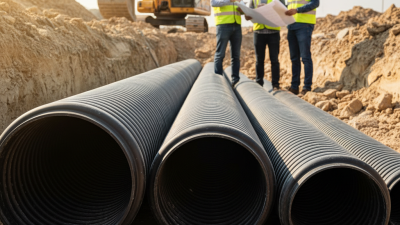
Trench quality is critical. Sharp stones can create concentrated stress beneath the pipe. Poor backfill may cause uneven settlement after rain. Butt-fusion areas also need clean surfaces, stable power, and trained operators. The Plastics Pipe Institute’s Handbook of Polyethylene Pipe emphasizes controlled fusion temperature and alignment. On difficult sites, crews should check wind, dust, trench width, and groundwater before welding. A neat spreadsheet is not enough. I would also allow extra pipe length for field changes, because drawings are rarely perfect. Salt, heat, traffic, and limited access can quietly change the installation decision.
Installation and site factors affecting HDPE pipe selection for water, industrial, drainage, and infrastructure projects.
| Project or Site Factor | Typical Conditions | Recommended HDPE Pipe Characteristics | Key Technical Considerations | Installation Guidance | Selection Priority |
|---|---|---|---|---|---|
| Pressure Rating | Pressurized water, irrigation, industrial process lines, and fire-water systems. | Select a pressure-rated PE pipe with a suitable SDR and material grade, commonly PE100 for high-performance applications. | Lower SDR values generally provide thicker walls and higher pressure capability. Confirm the design pressure, surge pressure, temperature, and service life. | Use butt fusion or electrofusion joints rated for the same service conditions as the pipe. Restrain valves and fittings against operating forces. | Critical |
| Non-Pressure Drainage | Gravity sewers, stormwater drainage, culverts, and agricultural drainage. | Use a flexible, structurally rated pipe with adequate ring stiffness and a profile suited to soil and traffic loads. | Hydraulic capacity depends on internal diameter, slope, flow conditions, and surface roughness. Structural design must consider trench width and bedding quality. | Provide uniform bedding, control haunch support, and compact backfill in layers. Avoid point loading from rocks or construction debris. | High |
| Buried Installation Depth | Shallow utility trenches, deep sewer installations, and variable cover depths. | Choose wall thickness and ring stiffness based on the combined effects of soil load, live load, groundwater, and installation quality. | HDPE is flexible and relies on soil-pipe interaction. Excessive deflection can result from inadequate side support rather than insufficient pipe strength alone. | Follow a project-specific trench and backfill design. Compact the haunch zone carefully because it provides important lateral support. | Critical |
| Traffic and Surface Loads | Road crossings, airport areas, ports, industrial yards, and rail corridors. | Select a pipe system designed for the expected live load and cover depth, with protective casing or concrete encasement where required. | Heavy vehicles can create significant dynamic loads, especially with shallow cover. Road authorities may impose additional minimum cover requirements. | Use controlled backfill and compaction. Consider trenchless installation or a protective sleeve where open-cut construction would disrupt traffic. | Critical |
| Trenchless Installation | Horizontal directional drilling, pipe bursting, sliplining, and river or road crossings. | Use a pipe with sufficient tensile strength, fusion-jointed continuity, and resistance to external scoring and point loads. | Check allowable pulling force, bend radius, drilling fluid compatibility, annular space, and temporary installation stresses. | Use a qualified fusion procedure, inspect the pipe surface before installation, and control pulling speed and alignment. | Critical |
| Ground Movement | Seismic regions, expansive soils, landslide-prone areas, mining zones, and areas with differential settlement. | Use a flexible HDPE system with continuous fused joints and sufficient strain capacity for the design movement. | HDPE can tolerate moderate ground deformation better than many rigid materials, but allowable strain and joint performance must be verified. | Provide suitable alignment flexibility, avoid excessive bending at fittings, and use transition details that accommodate movement. | Critical |
| Temperature Range | Cold climates, hot climates, buried lines, exposed lines, and seasonal temperature changes. | Select a resin and pressure class suitable for the operating temperature; use black, UV-stabilized pipe for prolonged outdoor exposure. | Pressure capacity decreases as operating temperature rises. Thermal expansion and contraction are significant for exposed HDPE pipelines. | Allow for thermal movement, use appropriate supports, and avoid installing the pipe under excessive tension during high-temperature conditions. | High |
| Ultraviolet Exposure | Above-ground pipelines, desert projects, coastal facilities, and long-term outdoor storage. | Use carbon-black stabilized HDPE pipe intended for outdoor service and protect stored pipe from prolonged damage or deformation. | Properly stabilized black HDPE generally provides strong resistance to solar exposure. Colored or non-black pipe may require additional UV verification. | Store pipe on level supports, prevent contact with sharp objects, and follow the supplier’s maximum storage and exposure recommendations. | High |
| Chemical Compatibility | Mining slurry, landfill drainage, wastewater, chemical process water, and contaminated soil. | Select HDPE after reviewing the specific chemical, concentration, temperature, exposure duration, and stress condition. | HDPE has broad chemical resistance, but compatibility is not universal. Oxidizing agents, hydrocarbons, and elevated temperatures require detailed review. | Confirm compatibility of pipe, gaskets, valves, fusion components, and protective coatings as a complete system. | Critical Review |
| Abrasion and Slurry Service | Sand slurry, mineral tailings, dredging, abrasive wastewater, and sediment transport. | Use a pipe selected for abrasion resistance, flow velocity, solids concentration, particle size, and operating temperature. | Service life depends on particle characteristics, velocity, pipe diameter, bends, and turbulence. Bends and reducers typically experience higher wear. | Use long-radius changes in direction where practical and provide access for inspection at high-wear sections. | High |
| Water Hammer and Surge | Pumped water mains, long transmission pipelines, rapid valve closure, and pump trip events. | Select a pressure class that includes transient pressure and use a system designed for controlled flow changes. | HDPE’s flexibility can reduce surge magnitude, but it does not eliminate water hammer. Surge analysis is required for long or high-head systems. | Use slow-closing valves, air-release protection, surge vessels, or control systems where analysis identifies a risk. | Critical |
| Groundwater and Buoyancy | High water tables, wetlands, coastal zones, submerged crossings, and flooded trenches. | Use a buoyancy-resistant design with suitable ballast, anchoring, or engineered backfill where necessary. | An empty HDPE pipe can float when groundwater or floodwater displaces the surrounding soil. Buoyancy is affected by pipe size, wall thickness, and water level. | Control groundwater during construction and install anchors, weights, or concrete supports according to the project design. | High |
| Jointing and Field Skills | Remote projects, limited site infrastructure, variable labor availability, and international construction teams. | Choose a fusion-compatible system with documented procedures, trained operators, inspection equipment, and traceable quality records. | Fusion quality depends on temperature, alignment, cleaning, heating time, pressure, machine calibration, and operator competence. | Prepare a jointing plan, qualify operators, protect fusion equipment from weather, and record parameters for every joint. | Critical |
| Logistics and Transport | Long-distance shipping, mountainous sites, remote regions, and projects with limited storage space. | Consider coilable small-diameter pipe, manageable straight lengths, standardized fittings, and locally available installation equipment. | Coils reduce the number of joints and transport volume, while large-diameter pipe may require specialized handling and route planning. | Use suitable lifting equipment, prevent dragging over abrasive surfaces, and inspect pipe for gouges, flattening, or kinks before installation. | High |
| Potable Water Requirements | Municipal water supply, rural water systems, desalination distribution, and service connections. | Use pipe certified for contact with drinking water under the regulations applicable in the project jurisdiction. | Review material formulation, taste and odor requirements, disinfectant exposure, pressure class, and applicable national standards. | Clean and disinfect the completed pipeline using the approved procedure before placing it into service. | Critical |
| Fire and Emergency Water Systems | Industrial facilities, utility corridors, storage terminals, and remote infrastructure. | Use a pressure-rated system approved or accepted by the applicable authority having jurisdiction. | Fire-water networks may require specific pressure, flow, reliability, burial, and inspection provisions beyond ordinary water-service requirements. | Provide suitable thrust restraint, isolation valves, testing access, and protection from mechanical damage. | Critical |
| Local Codes and Standards | Projects spanning multiple countries or funded under different regional regulations. | Select pipe dimensions, pressure classes, markings, and testing requirements that comply with the governing project standard. | Common design references may include ISO, EN, ASTM, AWWA, or national standards; requirements are not automatically interchangeable. | Confirm acceptance criteria before procurement, including dimensions, testing, fusion qualification, and documentation. | Critical |

Selecting an HDPE pipe supplier requires more than comparing price per meter. Start with the project’s pressure, temperature, soil, joining method, and operating life. The Plastics Pipe Institute’s Technical Report 4 lists PE4710 resin with a 1,600 psi hydrostatic design basis at 23°C. That figure is useful, but it does not replace project-specific calculations. Wall thickness, surge pressure, and installation quality still control performance.
Ask suppliers for resin identification, batch records, fusion procedures, and independent test results. ISO 4427 provides requirements for polyethylene piping systems used for water supply and related applications. A dependable supplier should show compliance for the complete system, not only the pipe compound. Check dimensional tolerances, pressure ratings, ovality limits, and temperature derating. Small gaps here can become expensive field problems.
Look beyond certificates. Review production capacity, inspection frequency, export packaging, and delivery performance on similar projects. Request references from climates resembling yours, including rocky ground or high heat. One practical warning: the cheapest quotation may exclude inspection, technical support, or replacement stock. That mistake is common. A stronger evaluation matrix assigns scores to quality evidence, engineering support, traceability, lead time, and total installed cost. Then challenge the scores. Supplier claims deserve verification through factory audits and witnessed testing, because paperwork alone cannot reveal every weakness.

Sign up for our mailing list to stay informed and up to date with our latest news and products!
(905) 832 – 0600
2175-A Teston Road
Maple, Ontario
L6A 1T3
(780) 451 – 0238
24790 – 117 Avenue
Acheson, Alberta
T7X 6C2
(604) 882 – 1564
9511 – 194A Street
Surrey, British Columbia
V4N 4G4
(306) 955 – 6005
3926 Arthur Rose Avenue Saskatoon, Saskatchewan
S7P 0C9
(450) 687 – 2721
2750 Rue Bernard-Lefebvre
Laval, Quebec
H7C 0A5